
Sub-Total: £0.00

Let’s Talk About Flavanol-Enriched Chocolate!
First published 06 May 2022|Last Updated 18 Jun 2026
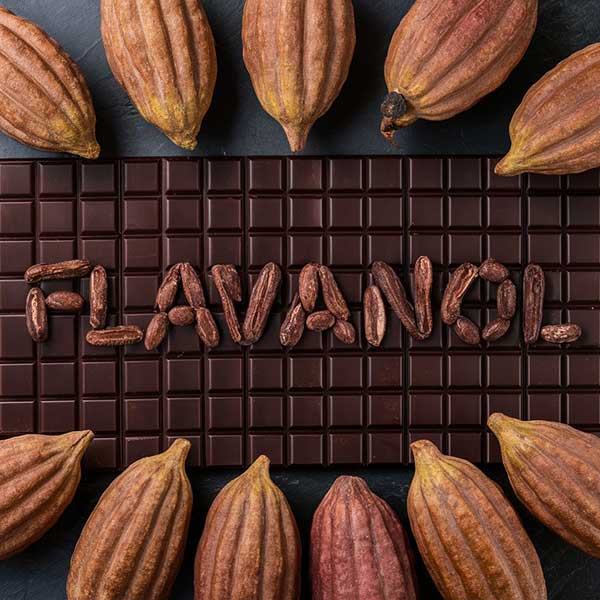
Flavanol-Enriched Chocolate: Marketing Term, Or A Genuine Upgrade?
By Ben Popple, founder of Mr Popple’s Chocolate · Updated June 2026 · 6 min read
🍫 The 60-second answer
Flavanol-enriched chocolate is real chocolate that’s been processed, lost most of its natural flavanols, then had a flavanol extract added back in. The end product can deliver a clinically meaningful daily dose. But it isn’t the same thing as chocolate that kept its flavanols in the first place.
You’ve seen the bars. They sit at the smug end of the health-food aisle, wrapped in serious typography, promising “high-flavanol chocolate” and “cardio-care benefits” at roughly the same price as a small bottle of decent wine. They sound like supplements. They sometimes act like supplements. And they raise a perfectly fair question.
Is “flavanol-enriched” a meaningful upgrade, or is the chocolate industry quietly selling you back something it took out in the first place?
What are cocoa flavanols, exactly?
Flavanols are a sub-group of polyphenols, the natural compounds plants make for their own protection. In cocoa, they’re the compounds doing most of the heavy lifting on the health side: improved blood flow, lower blood pressure, better insulin response. Cacao is, gram for gram, one of the richest natural sources of flavanols on the planet.
They turn up in tea, red wine, apples, and most relevantly here, in cacao. Of all the things in cocoa that get described as “good for you”, flavanols are the ones doing most of the heavy lifting.
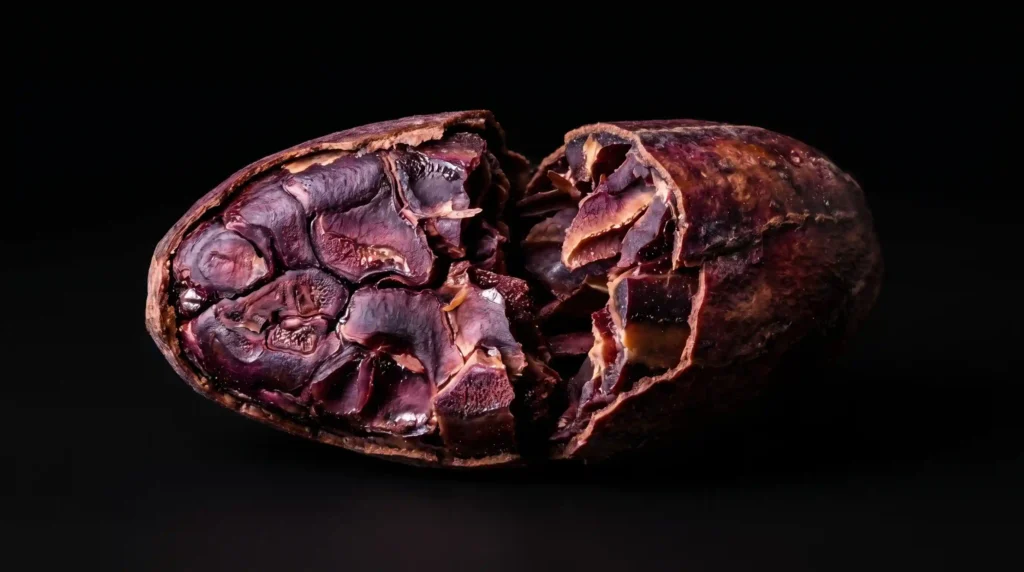
The buzz around them has grown loud enough that even the FDA is sitting up and taking notice. Cacao is, gram for gram, one of the richest natural sources of flavanols on the planet. Which sounds like it should mean every chocolate bar is a little health-boost in a wrapper.
Reality, naturally, is more interesting than that.
For the broader picture on what cocoa’s other compounds do, our polyphenols and antioxidants guide goes deeper into the science.
What does “flavanol-enriched” actually mean on a label?
Flavanol-enriched chocolate has been processed in ways that destroy most of its natural flavanols, then had a flavanol extract added back in afterwards. The end product can contain more flavanols than typical chocolate, sometimes a lot more. It’s a real category with real evidence behind it. It just isn’t quite what nature originally handed over.
Here’s the part the front of the wrapper tends to skip over.
🔍 Decoder: “flavanol-enriched”
Chocolate that has been processed in ways that destroy most of its natural flavanols, then had a flavanol extract added back in afterwards. The end product can genuinely contain more flavanols than standard chocolate, sometimes a lot more. It is not, however, what nature originally handed over.
The reason this category exists at all comes down to one decision most chocolate makers take for granted: roasting. Standard chocolate production roasts cacao beans at temperatures of 120-150°C to develop that familiar deep, slightly bitter cocoa flavour. The taste benefit is real, and most of the world’s chocolate culture is built on it.
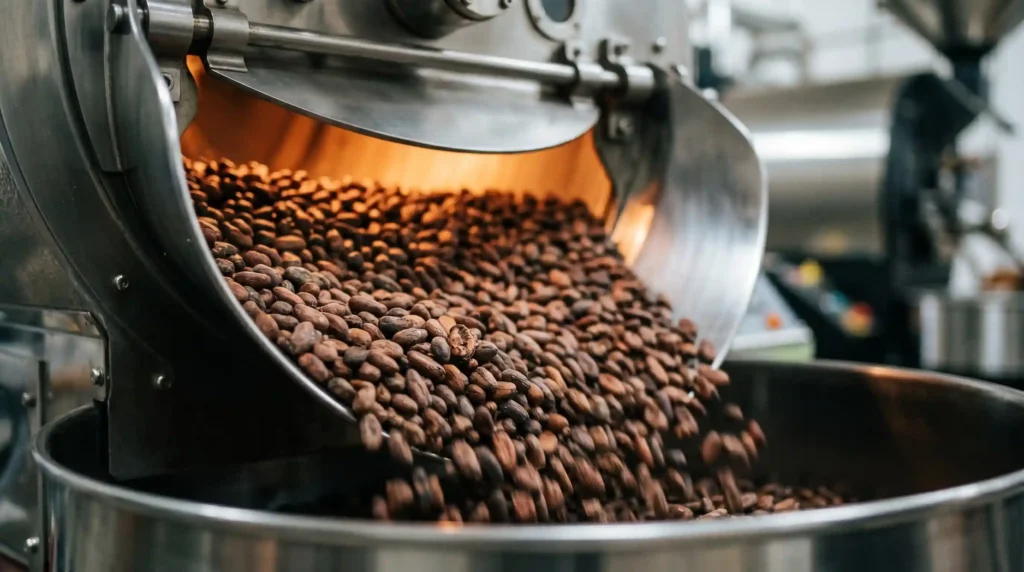
The cost, though, is significant. Heat is the arch-nemesis of flavanols. High-temperature roasting destroys a substantial proportion of them, and by the time the bar reaches the supermarket shelf, much of cocoa’s natural compound profile has politely excused itself.
So the modern industry has, in a slightly poetic way, created its own market. Roast the beans, lose the flavanols, then sell flavanol-enriched products as a premium category to people who’d quite like the health benefits back, please. Honestly? It’s not a scam. It’s just a roundabout route.
Are the marketing claims actually true?
Most are technically defensible. Some are doing more careful work than they look. The “clinically proven dose” claim is genuinely earned by a handful of premium brands. “Heart-healthy” rests on a real EFSA approval. “Naturally rich” leans heavily on the word naturally. Each one is worth a sense-check.
“Clinically proven cocoa flavanol content”
Often true. Brands like Mars’s CocoaVia have invested seriously in flavanol-preservation processes and have published research showing measurable physiological effects. If you want a guaranteed daily dose with a published evidence base behind it, this is a legitimate route. They’ve earned that claim.
“Heart-healthy chocolate”
The European Food Safety Authority approved a specific health claim for cocoa flavanols in 2012, later codified in Commission Regulation (EU) No 851/2013. The claim is that 200mg of cocoa flavanols per day contributes to normal endothelium-dependent vasodilation. Translated from regulator-speak: flavanols genuinely support cardiovascular health by improving blood flow and reducing blood pressure. Some flavanol-enriched bars hit that 200mg threshold. A surprising number of supermarket “high-cocoa” bars don’t, despite tasting bitter enough to make your eye twitch. Bitter and dark are not the same as flavanol-rich.
“Helps with blood sugar”
There’s something to this one. Studies suggest flavanol-rich cocoa can enhance insulin sensitivity, meaning the body becomes a bit more efficient at processing sugar. The effect appears to scale with flavanol content, which is the bit most roasted and ultra-processed chocolate doesn’t have much of in the first place.
“Naturally rich in cocoa flavanols”
Worth pausing on. The word naturally is doing some heavy lifting here. A flavanol extract added back to processed cocoa is, technically, a natural compound. But it’s a fair distance from a bar where the flavanols never had to leave at all.
Roasted vs raw cocoa: where flavanols live (and where they go to die)
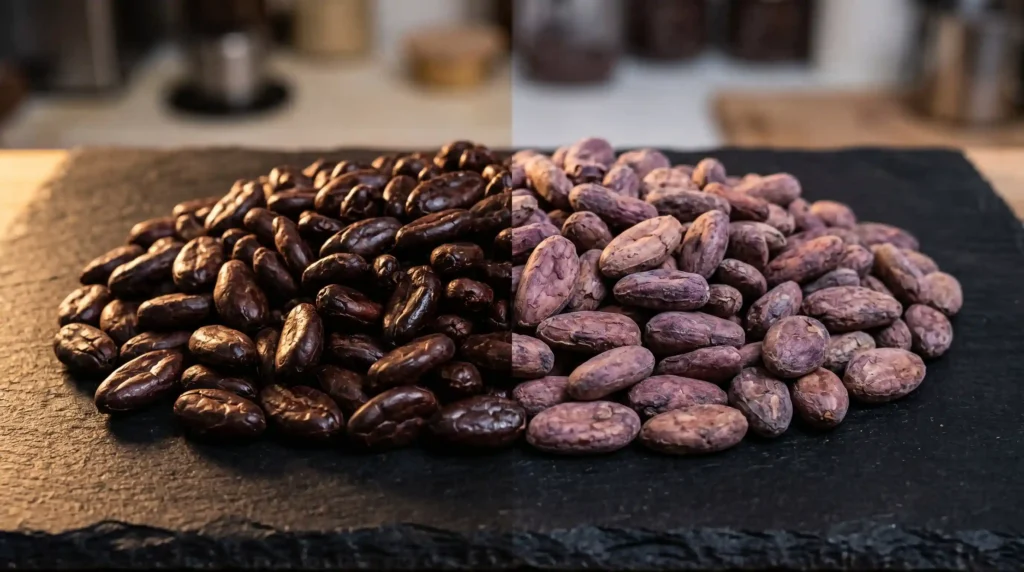
Roasted chocolate loses most of its natural flavanols to heat. Raw chocolate, kept below 45°C throughout production, retains the lion’s share. The taste is different, the processing is different, and the nutritional profile is meaningfully different. This is the comparison the chocolate industry would rather you didn’t dwell on.
| Conventional roasted chocolate | Raw (unroasted) chocolate | |
|---|---|---|
| Bean processing | Roasted at 120-150°C | Kept below 45°C throughout |
| Flavanol retention | Substantially reduced | Largely preserved |
| Other cocoa compounds | Often partially destroyed | Fully retained |
| Taste profile | Smoother, deeper, more uniform | Complex, bright, sometimes fruity |
| Need for “enrichment” | Often added back later | Already there from the start |
The “raw” column also keeps theobromine, magnesium, and the dozens of other compounds in cocoa that don’t get measured but are quietly doing good work. Flavanol-enrichment is one specific nutrient added back into a product that has otherwise been chemically simplified by heat.
It’s the difference between a multivitamin and a fresh organic salad.
Curious to taste what naturally flavanol-rich actually tastes like?
Mr Popple’s raw chocolate bars are made under 45°C, with no roasting, no enrichment, and nothing taken out that didn’t need to leave.
How do you find genuinely flavanol-rich chocolate?
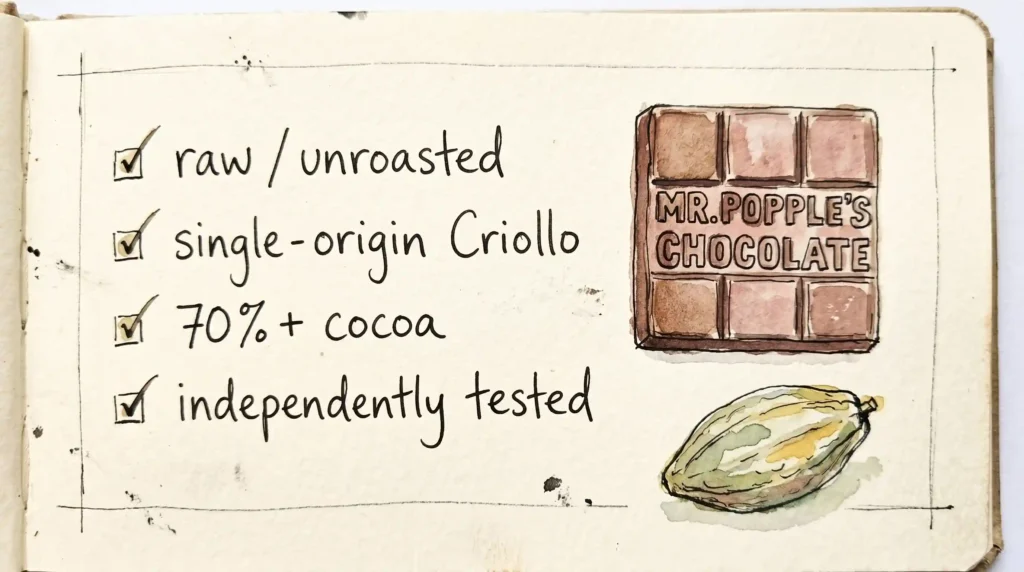
If genuinely flavanol-rich chocolate is the goal, the front of the wrapper is the wrong place to look. The useful information is, as ever, on the back. Four signals matter, in roughly this order: raw or unroasted, single-origin Criollo or fine-flavour cacao, 70%+ cocoa, and independent testing.
Raw or unroasted. Heat is the arch-nemesis of flavanols. Bars made below about 45°C retain the lion’s share of their natural compound profile. This single processing decision matters more than almost any other.
Single-origin Criollo or fine-flavour cacao. Fine-flavour beans like Criollo tend to have a richer polyphenol and aromatic profile than the bulk Forastero variety used in most mass-market chocolate. Origin transparency is itself a useful tell: brands willing to disclose where their cacao comes from tend to also be honest about how it’s processed.
70% cocoa or higher. Not a guarantee, but a sensible floor. Below this, the cocoa is usually too diluted to deliver meaningful flavanols regardless of what happened during processing. Our explainer on what cocoa percentage actually means in chocolate digs into this properly.
Independent testing. Brands serious about their flavanol content will tell you so. The Oxford Brookes Centre for Nutrition and Health study we commissioned tested five UK dark chocolate brands. Mr Popple’s came out top on polyphenol content and antioxidant capacity by a meaningful margin. We didn’t enrich anything. We just didn’t roast it.
“We didn’t enrich anything. We just didn’t destroy the good stuff by roasting it.”
— Ben Popple, founder of Mr Popple’s Chocolate
Key terms, briefly
Flavanols — A sub-group of polyphenols. In cocoa, the most studied are epicatechin, catechin, and the larger procyanidins. The “active ingredients” most strongly linked to cardiovascular benefit.
Polyphenols — The umbrella family of plant compounds that flavanols belong to. Found in tea, wine, fruit, vegetables, and cocoa.
Epicatechin — The single most studied flavanol in cocoa research. The compound most often cited in cardiovascular studies.
Criollo — A fine-flavour cacao variety native to South America. Higher in aromatic compounds and polyphenols than the bulk Forastero variety used in most mass-market chocolate.
EFSA — European Food Safety Authority. Approved the 200mg cocoa flavanol health claim in 2012.
Dutching / alkalisation — A separate processing step that further reduces flavanol content, common in mass-produced cocoa powder. Worth checking labels for “alkalised” or “processed with alkali”.
So is flavanol-enriched chocolate worth it?
Here’s the fair answer.
If you specifically want a clinically validated 200mg+ daily flavanol dose for cardiovascular reasons, products like CocoaVia exist for exactly that, and they have evidence behind them. They’re functional foods that happen to taste like chocolate. That’s a legitimate niche, and there are days when it’s the right tool for the job.
For the rest of life, though, the simpler route is to choose chocolate that didn’t need rescuing in the first place. Raw, low-temperature, high-cocoa, single-origin bars deliver the flavanols, the rest of the cocoa goodness, and a more interesting eating experience. No supplement positioning, no asterisks on the marketing, no flavanol extract sprinkled on at the end like seasoning. Just chocolate, behaving like chocolate, doing what good chocolate has always done.
Try chocolate that didn’t need rescuing
Mr Popple’s bars are made from raw, single-origin Peruvian Criollo cacao, processed under 45°C. Independently tested by the Oxford Brookes Centre for Nutrition and Health and found to contain more polyphenols than four leading UK dark chocolate brands. No enrichment required.
Free UK delivery on orders over £25 · Plastic-free packaging
Quick verdict
| Question | Answer |
|---|---|
| Is “flavanol-enriched” a meaningful term? | Sometimes. Look for stated flavanol content in mg, not just the label claim. |
| Is enriched chocolate healthier than typical dark chocolate? | Usually yes, mostly because most “typical” dark chocolate has had its flavanols roasted out. The bar to clear is low. |
| Is enriched chocolate healthier than naturally flavanol-rich raw chocolate? | Generally not. Raw bars retain the full cocoa profile, not just the one nutrient. |
| What should I actually buy? | Raw, unroasted, 70%+ |
Frequently Asked Questions
Is flavanol-enriched chocolate good for you?
Generally yes, when compared with standard chocolate that has had its flavanols processed out. Flavanol-enriched bars can deliver clinically meaningful doses of cocoa flavanols (200mg+ per day), which support cardiovascular health and circulation. That said, naturally flavanol-rich raw chocolate offers similar benefits plus the rest of cocoa’s intact compound profile, without the supplement positioning.
Which chocolate has the most flavanols?
Raw, unroasted, single-origin dark chocolate at 70% or higher cocoa typically retains the highest natural flavanol content. Heavily processed chocolates (roasted at 120-150°C, often alkalised) lose a substantial proportion of their flavanols during production, regardless of how dark they look. Flavanol-enriched bars are the exception, since they have extract added back in.
How much flavanol per day for health benefits?
The European Food Safety Authority’s approved health claim specifies 200mg of cocoa flavanols per day to support normal endothelium-dependent vasodilation. This is roughly the amount in 10g of high-quality flavanol-enriched cocoa or a generous portion of raw, unroasted dark chocolate.
Does all dark chocolate contain flavanols?
Technically yes, but the amount varies enormously. Most mass-produced dark chocolate contains only a fraction of the flavanols it started with, because of high-temperature roasting and other heat-intensive steps. Bitter taste is not a reliable indicator of flavanol content.
What’s the difference between flavanols and flavonoids?
Flavanols are a specific sub-group within the broader flavonoid family. All flavanols are flavonoids, but not all flavonoids are flavanols. In cocoa research, the most studied flavanols are epicatechin, catechin, and the larger procyanidins.