
Sub-Total: £0.00

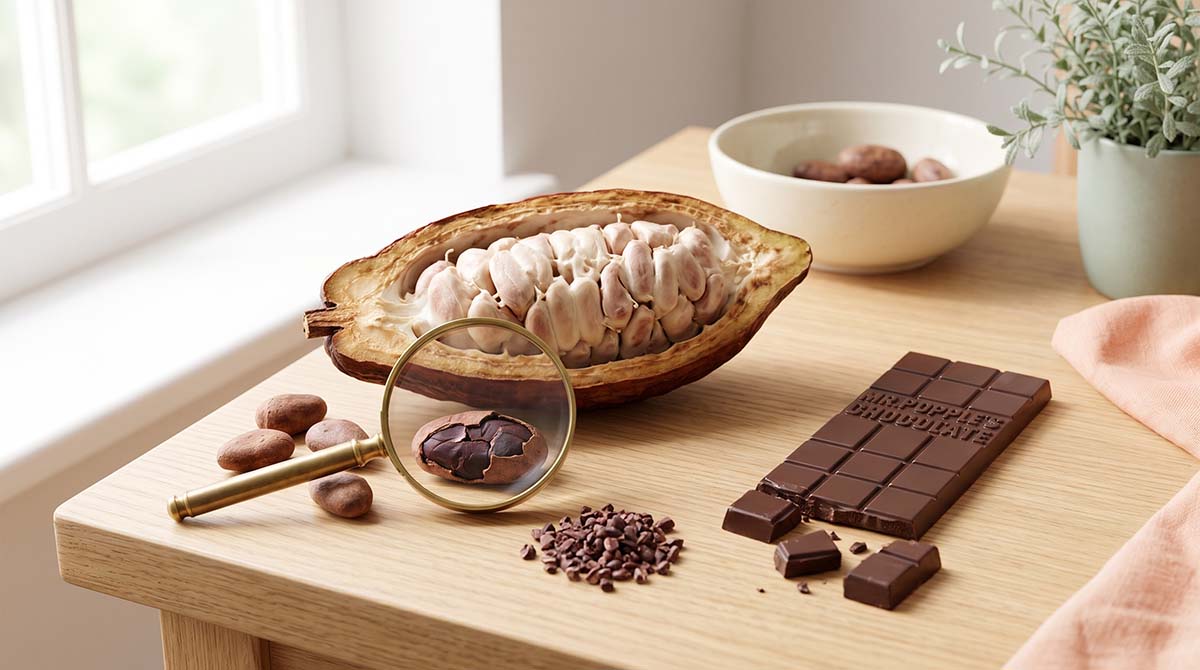
Raw Cacao Benefits: What the Science Says
This page gathers the raw cacao benefits researchers have found so far, area by area, with a link to every study.
There are countless studies on the properties of raw cacao and our other ingredients, and we make our organic dark chocolate from unroasted cacao to retain all the natural properties of the beans.
To honour the natural properties of our cacao, we never mask it with refined sugars. In fact, our Pure Peruvian is 100% dark chocolate, completely uncut and made from nothing but stone-ground unroasted Peruvian Criollo cacao. Our Pure Peruvian was top for antioxidants and polyphenols in an independent Oxford Brookes test.
Most of the studies below used cocoa drinks, cocoa extract or dark chocolate rather than raw cacao itself, so each point says what was tested.
Rather taste it than read about it? Our dark chocolate bars are all made from the same unroasted cacao, from 61% to 100%.
What's in raw cacao?
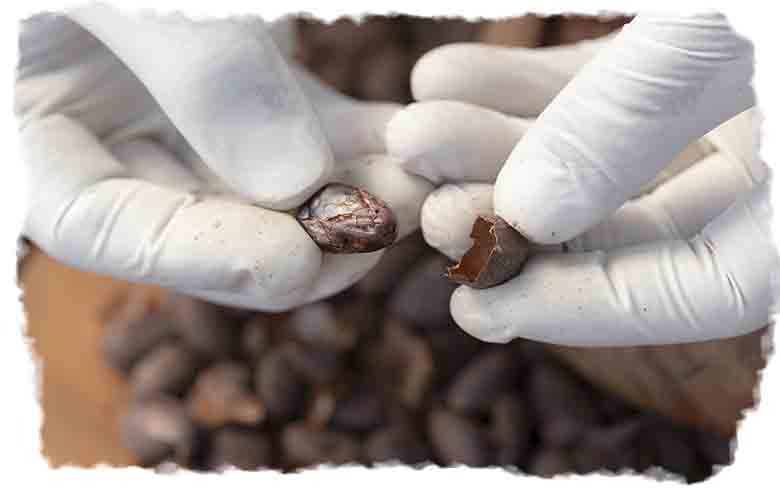
Raw cacao is rich in flavanols, a family of plant compounds, and it also brings fibre, minerals and theobromine. Here is what the research and the food data show.
- Flavanols: a 2013 review in the British Journal of Clinical Pharmacology found that cocoa and chocolate contain a large share of antioxidant flavonoids, most of them in the form of epicatechin (Nehlig, 2013).
- Fibre, minerals and theobromine: unsweetened cocoa powder is cacao with most of its fat pressed out. The table below shows what 100g of it holds (USDA FoodData Central). Our Pure Peruvian, made from nothing but unroasted cacao, has 22.1g of fibre per 100g.
- Theobromine: a natural relative of caffeine, found at high levels in cocoa (Baggott et al., 2013).
- What magnesium and iron do: magnesium helps turn the food we eat into energy (NHS), and iron helps the body make red blood cells, which carry oxygen around the body (NHS).
| Nutrient | Amount per 100g |
|---|---|
| Fibre | 23g |
| Magnesium | 533mg |
| Iron | 3.3mg |
| Theobromine | 2,057mg |
| Also present | Copper, zinc, potassium and phosphorus |
Read more: iron in dark chocolate · dark chocolate and magnesium · copper in dark chocolate · zinc in dark chocolate · potassium in chocolate · phosphorus in chocolate
Raw vs roasted cacao: why unroasted matters
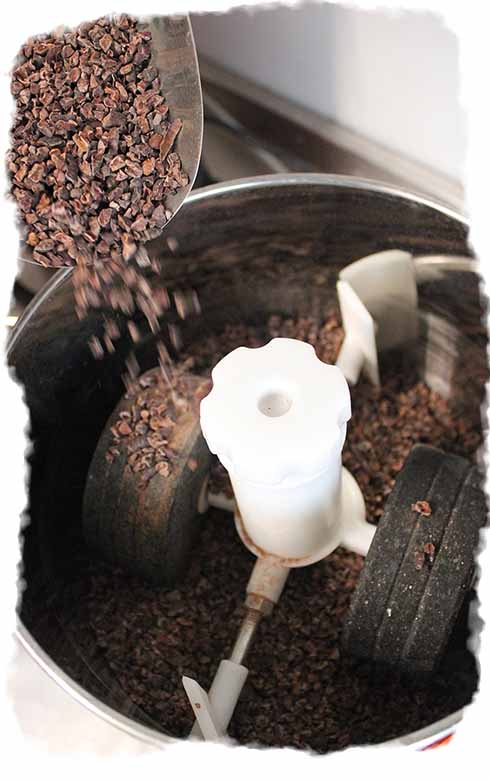
Most chocolate is made from beans roasted at 120-150°C. Roasting builds flavour, but research shows it also breaks down cacao's polyphenols, flavanols included, which is why we keep our cacao below 42°C from bean to bar.
| Study | Finding |
|---|---|
| Ioannone et al., 2015 Food Chemistry |
The hotter the roast, the faster cocoa beans lost their flavanols. |
| Penn State University, 2018 Food Chemistry |
Roasting reduced the total phenolics and the epicatechin in cocoa beans. |
| Oxford Brookes Centre for Nutrition and Health | Our Pure Peruvian measured 2,718mg of polyphenols per 100g in an independent Oxford Brookes test, the highest of the five bars tested. |
| Most chocolate | Mr Popple's Chocolate | |
|---|---|---|
| The beans | Roasted at 120-150°C | Unroasted single-origin Peruvian Criollo |
| Temperature | 120-150°C during roasting | Below 42°C from bean to bar |
| Grinding and finishing | Varies by maker | Stone-ground for 60-80 hours, then hand-tempered and hand-moulded in small batches |
Ben Popple, our founder, started making raw chocolate in 2007 because of the way unroasted cacao made him feel. When he went looking for why, he found the research showing that roasting reduces cacao's polyphenols, so leaving it out keeps more of them in the bean. Read more about polyphenols in dark chocolate and how we make our chocolate, or see the full comparison of raw chocolate vs dark chocolate.
"Roasting is how most makers get the same flavour from beans that vary. Leave it out and the bean has to be good enough to taste of itself."
Ben Popple, founder of Mr Popple's Chocolate
| Taste unroasted cacao for yourself
Every one of our dark chocolate bars is made from single-origin Peruvian Criollo, stone-ground below 42°C for 60-80 hours, then hand-tempered and hand-moulded in small batches. → Shop our dark chocolate bars Free UK delivery over £25 · Plastic-free packaging · Top 14 allergen free · BDA organic certified |
Is cacao good for you? The heart and blood pressure research
Cocoa flavanols are the most studied part of cacao, and much of that research looks at the heart and blood vessels. These are the main findings.
| Study | Finding |
|---|---|
| European Food Safety Authority, 2012 | EFSA concluded that 200mg of cocoa flavanols a day help blood vessels widen normally, which contributes to normal blood flow. |
| Cochrane review, 2017 35 trials, 1,804 mostly healthy adults |
Flavanol-rich chocolate and cocoa products lowered blood pressure by about 2 mmHg in the short term. |
| Heart, 2019 23 studies, 405,304 people |
Eating chocolate was linked to a lower risk of cardiovascular disease at intakes below 100g a week, with the lowest risk at around 45g a week. |
| Heart failure review, 2017 5 studies, 106,109 people |
Eating chocolate in moderation was linked to a lower risk of heart failure. |
| Archives of the Turkish Society of Cardiology, 2015 | This review reports that dark chocolate has been shown to improve the lining of blood vessels and blood fat levels, and to make platelets less sticky. |
Read more: dark chocolate and cholesterol
Cacao, the brain and mood
Studies have linked cocoa flavanols and dark chocolate to blood flow in the brain, memory and mood.
| Study | Finding |
|---|---|
| Nehlig, 2013 British Journal of Clinical Pharmacology |
Cocoa flavonoids enter the brain and increase its blood flow, and flavonoids have been linked to a lower risk of Alzheimer's disease and stroke in people. |
| CoCoA study, 2015 90 older adults, 8 weeks |
A daily cocoa flavanol drink improved some measures of age-related decline in thinking skills. |
| Journal of Experimental Biology, 2016 A lab study in pond snails |
Epicatechin, the main flavanol in cacao, quickly reversed a stress-induced memory block and strengthened long-term memory. |
| Loma Linda University, 2018 Two pilot studies |
Eating 70% dark chocolate was linked to changes in immune and anti-inflammatory gene activity, and to brain-wave patterns tied to memory and recall. |
| Depression and Anxiety, 2019 13,626 US adults |
People who reported eating dark chocolate had 70% lower odds of reporting clinically relevant depressive symptoms than people who ate no chocolate. |
| Psychopharmacology, 2013 | The researchers concluded that theobromine, at the level found in a standard 40g bar of dark chocolate, may contribute to chocolate's positive effects. |
Read more: chocolate and mood
Blood sugar and insulin
| Study | Finding |
|---|---|
| American Journal of Clinical Nutrition, 2005 Healthy adults |
Dark chocolate, but not white chocolate, improved insulin sensitivity and lowered blood pressure. |
| University of Sydney GI database | Dark chocolate has a glycaemic index (GI) of 23, which puts it in the low-GI group (55 or under). |
Exercise and energy
| Study | Finding |
|---|---|
| Kingston University, 2015 Journal of the International Society of Sports Nutrition |
After eating 40g of dark chocolate a day for 14 days, 9 trained cyclists used less oxygen at a moderate pace and covered more distance in a two-minute time trial. |
Read more: dark chocolate before a workout · dark chocolate and metabolism
More raw cacao benefits being studied
| Area and study | Finding |
|---|---|
| Skin Journal of Nutrition, 2006 |
Women who drank high-flavanol cocoa every day for 12 weeks had 25% less skin reddening under UV light, and denser, better-hydrated, smoother skin. Read more about dark chocolate and your skin. |
| Gut American Journal of Clinical Nutrition, 2011 |
In 22 healthy adults, 4 weeks of high-flavanol cocoa drinks increased beneficial bifidobacteria and lactobacilli in the gut. Read more about dark chocolate and digestion. |
Inflammation, bones, periods and stem cells: researchers are also looking at cacao and each of these. Read more: dark chocolate and inflammation · dark chocolate and bones · chocolate during your period · cacao and stem cells
The science behind our other ingredients
We never use refined sugar, sugar alcohols or stevia. These are the ingredients we use instead, and what researchers have found about them.
Yacon syrup
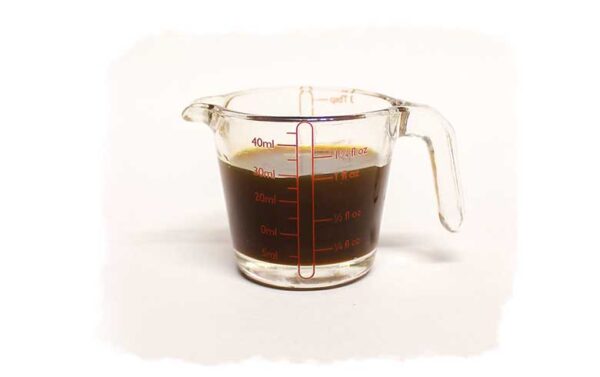
Yacon syrup comes from the root of the Andean yacon plant, an abundant source of fructooligosaccharides (FOS), a type of fibre (Caetano et al., 2016).
| Study | Finding |
|---|---|
| Nutrients, 2016 | The same review found there is enough evidence to class FOS as prebiotics. |
| Pedreschi et al., 2003 A lab study |
Three probiotic strains, two lactobacilli and one bifidobacterium, were able to ferment the FOS from yacon root. |
| Digestion, 2008 16 healthy adults |
Yacon syrup sped up colonic transit, how quickly food moves through the large intestine, compared with a placebo, and was well tolerated. |
| Clinical Nutrition, 2009 55 women, 120 days |
Daily yacon syrup was followed by lower body weight, waist size and fasting insulin. |
| Frontiers in Nutrition, 2025 A meta-analysis of 12 randomised trials of yacon in different forms |
Yacon intake lowered BMI and increased stool frequency and fibre intake. |
| Food Research International, 2019 40 women |
Adding yacon syrup to breakfast lowered blood glucose at 30 minutes and insulin at 15 to 45 minutes, compared with a placebo. |
To learn more about yacon and the bars we sweeten with it, read our guide to yacon syrup.
Lucuma
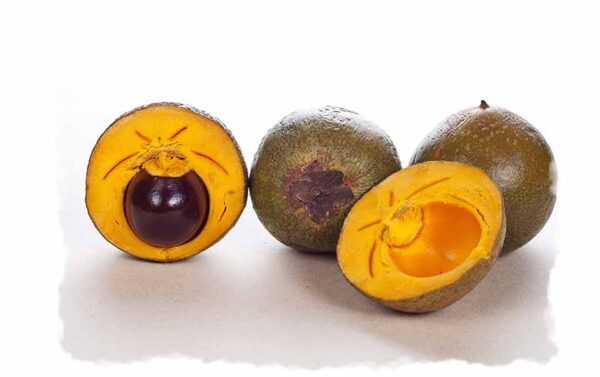
Lucuma is a Peruvian fruit, and its powder gives some of our bars a light creaminess and natural sweetness.
| Study | Finding |
|---|---|
| Journal of Medicinal Food, 2009 A lab study |
Water extracts of lucuma were among the strongest of six Peruvian fruits at blocking alpha-glucosidase, an enzyme that breaks starch down into sugar. The researchers saw potential for food-based approaches to type 2 diabetes. |
To learn more about lucuma and the bars we make with it, see our page on lucuma fruit.
Coconut blossom sugar
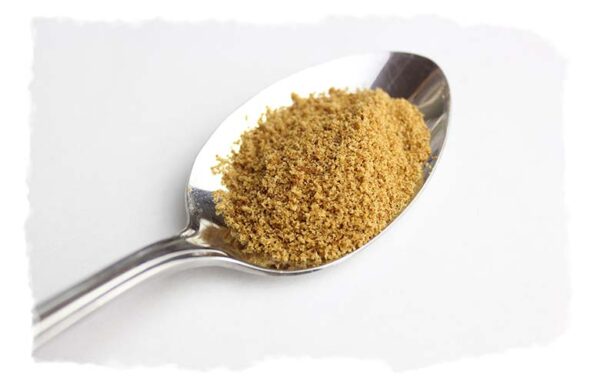
Coconut blossom sugar is a nectar made from coconut flower sap, with a lower GI than refined sugar.
| Study | Finding |
|---|---|
| Food Science & Nutrition, 2019 | Based on its antioxidant and nutritional properties, the researchers concluded that coconut sap could be a healthier sugar source than sugar palm or sugarcane juice. |
| Food and Nutrition Research Institute, Philippines | Coconut sap sugar measured a glycaemic index of 35, which is low GI. |
To learn more about coconut sugar and the bars we make with it, read about our coconut sugar chocolate.
Our dairy-free mylk base
Our mylk bars get their creaminess from gluten-free oat flour, gluten-free rice flour and lucuma, with no dairy at all. To learn more about our mylk base and the bars we make with it, read about our dairy-free mylk chocolate.
| Find your bar
From the 100% Pure Peruvian to the 61% Dark Mylk, our dark chocolate is organic, vegan, palm-oil free and free from the top 14 allergens, and every bar is made by hand in small batches. Or browse all our raw chocolate bars, mylks included. Free UK delivery over £25 · Plastic-free packaging · Top 14 allergen free · BDA organic certified |
Last updated: October 2026