Nut Free Chocolate: 6 Myths, and How Our Bars Are Made
First published 16 Oct 2026|Last Updated 16 Oct 2026
By Ben Popple, founder of Mr Popple’s Chocolate · Updated October 2026 · 7 min read
🍫 The 60-second answer
Nut free chocolate is less simple than it sounds. A bar with no nuts in its ingredients can still pick up traces from a shared line or supplier, and “may contain” labels are voluntary. Below, six common myths are cleared up, followed by exactly how our bars are made in a dedicated nut free facility, from ingredients sourced from suppliers that don’t handle or sell nuts.
Nut free chocolate sounds like the easiest thing in the world to make: leave the nuts out of the recipe and the job’s done. It’s a fair assumption, and it’s the one that catches people out, because what’s in the recipe and what’s been near the chocolate are two different questions.
That difference matters to a lot of people. A Food Standards Agency report found that as many as 6% of UK adults, around 2.4 million people, may have a food allergy, most often to nuts or fresh fruit. If you’re one of them, or you’re buying for one of them, you probably read chocolate wrappers more closely than most people read the terms and conditions.
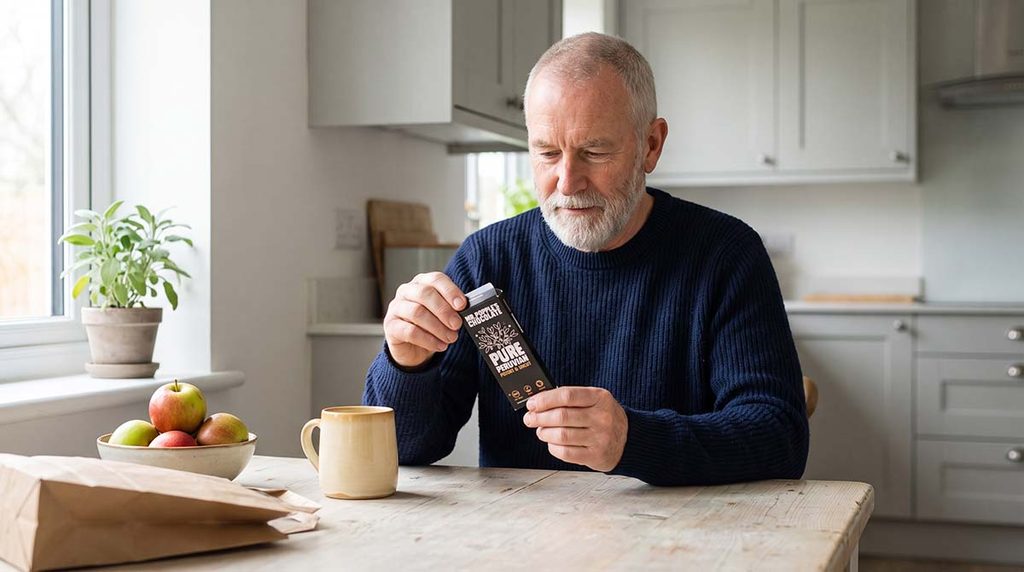
I’ve made our chocolate nut-free since my very first batch, back in 2007, because I wanted everyone to be able to enjoy it, no matter what their dietary choices or requirements are.
So here are the six myths I think are most worth clearing up, followed by an honest account of how our bars are made, including the one thing we don’t do. For the wider picture across all 14 allergens, our guide to free from chocolate covers the rest.
Myth 1: no nuts in the ingredients means nut free chocolate
An ingredients list tells you what the manufacturer put in on purpose. It doesn’t tell you what the chocolate shared a production line, a factory or a supplier’s warehouse with. UK law says makers must highlight any of the 14 major allergens used as ingredients, but an accidental trace isn’t an ingredient, so it won’t be listed there.
It’s like slicing a plain loaf on a board that held a nut loaf an hour earlier: the crumbs don’t check the recipe first. Read the ingredients list first, then keep going. The next place to look is the small print underneath it.
Myth 2: “may contain nuts” on food has a fixed legal meaning
There’s no fixed meaning behind “may contain nuts”. These statements are voluntary, and there’s no set amount that triggers one. A precautionary label tells you the brand thinks traces may have got in by accident, so it’s a genuine warning, but it can’t tell you how much, if any, ended up in the bar you’re holding.
The government’s labelling guidance, which calls these statements PAL (precautionary allergen labelling), puts the first point plainly: “Food businesses are not legally required to use PAL.” Anaphylaxis UK adds that the different wordings, from “may contain” to “made in a factory that handles nuts”, all signal the same risk.
The labels earn their place, too. When researchers tested 569 biscuits and chocolates bought on the European market, the chocolates were more likely than the biscuits to contain allergens the label didn’t declare, and most of the chocolates carrying a precautionary label tested positive for hazelnut.
🔍 Decoder: “precautionary allergen labelling”
The official name for “may contain” and “made in a factory that handles…” statements. A maker adds one when it has identified a cross-contamination risk it can’t rule out.
Myth 3: dark chocolate bars never contain nuts
A dark bar can have a short recipe, which is why people assume it’s nut-free. But the cocoa percentage only tells you how much cacao is in the bar. It says nothing about what else runs through the same factory, so nut free dark chocolate depends on how and where it’s made, not on how dark it is.
A short recipe does help, because there are fewer ingredients to trace back to a supplier. Pure Peruvian 100% has a single ingredient on its wrapper, raw cacao, and our wider range of vegan dark chocolate runs from 61% to 100%, all made with no nut ingredients in our nut-free facility.
Myth 4: vegan or dairy-free chocolate is nut-free
A vegan label means no animal ingredients were used on purpose. It’s a promise about the recipe, not the factory, and the same government guidance says that label doesn’t guarantee a product is free from a particular allergen. So vegan nut free chocolate and dairy free nut free chocolate need the same label check as anything else.
A dairy-free bar has to get its creaminess from somewhere, and some vegan and dairy-free milk chocolate is made with nut butters, such as cashew or almond, so it’s worth checking where. In our dairy-free mylk chocolate bars, it comes from a mylk base made with certified gluten-free oat and rice flours. Vegan describes what went into the bowl, not what’s been through the building.
Myth 5: coconut and nutmeg are on the nut allergen list
Not in UK law. The allergen rules name eight tree nuts: almonds, hazelnuts, walnuts, cashews, pecans, Brazil nuts, pistachios and macadamias. Coconut isn’t one of them, and nutmeg is a spice. Peanuts are a separate entry altogether, so a label can say “peanut free” without saying anything about tree nuts.
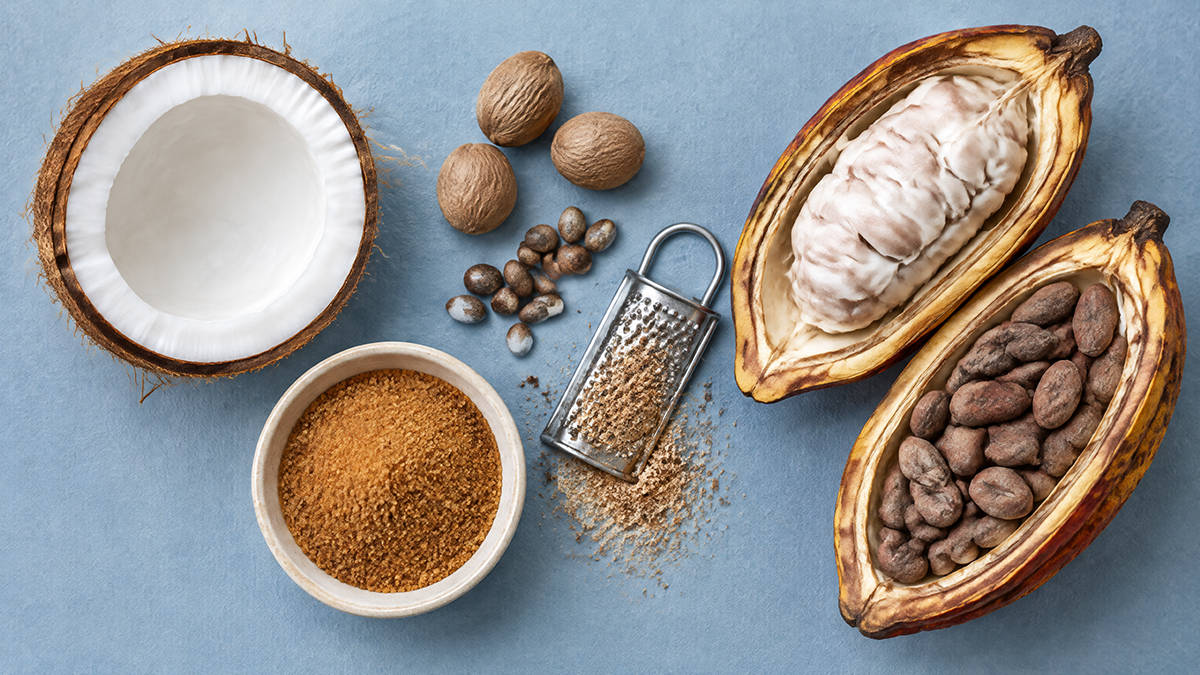
Coconut does turn up in some of our bars, as coconut blossom sugar, a nectar made from the sap of coconut flowers that sweetens our mylks and Amarillo Chilli. If you have a sensitivity to coconut, a spice or anything outside the 14, the full ingredients list is the place to start, and your allergy specialist is the person to ask.
Myth 6: a nut-free facility means every bar is lab-tested
A nut-free site is about controlling what goes in, not testing what comes out. Our chocolate is made in a dedicated vegan, dairy-free and nut-free facility under stringent HACCP, and it has been nut-free since my first batch in 2007. We don’t lab-test finished bars for nut traces, and I’d rather tell you that than leave you guessing.
In practice, control starts at the door, with one simple rule: no nuts or peanuts come on site, and that includes staff lunches and anything a visitor brings in. Every ingredient is sourced from suppliers who don’t handle or sell nuts, or anything containing them.
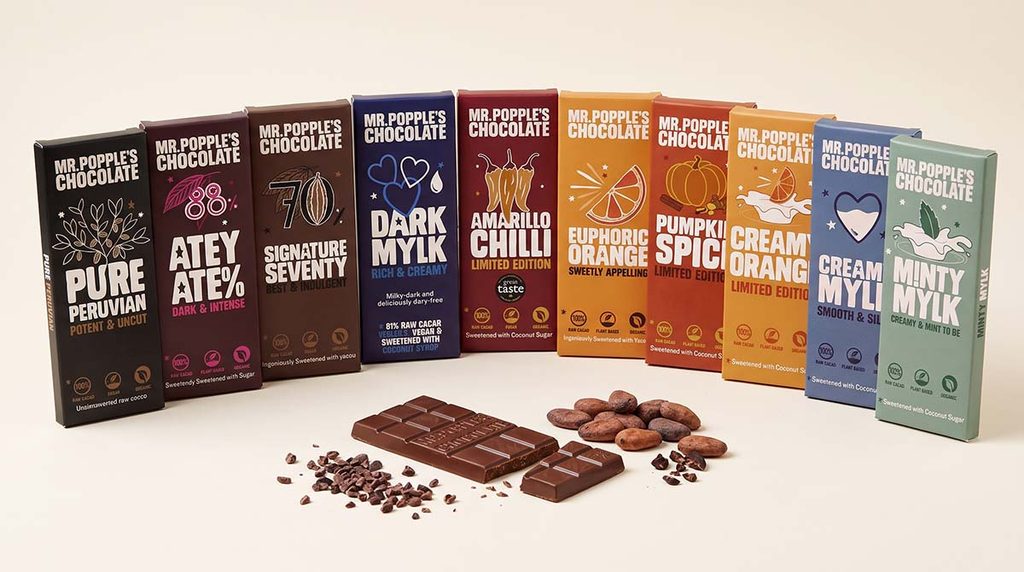
Every bar in our range is vegan and free from the top 14 allergens. Here’s what goes into each of them:
Bar
Ingredients
Pure Peruvian 100%
Raw cacao
Atey Ate% 88%
Raw cacao, cacao butter, yacon syrup (12%)
Signature Seventy 70%
Raw cacao, yacon syrup, cacao butter, lucuma fruit powder (3.5%)
Euphoric Orange 70%
Raw cacao, yacon syrup, cacao butter, lucuma fruit powder (3.5%), sweet orange oil (0.5%)
Amarillo Chilli 65%
Raw cacao, coconut blossom sugar, cacao butter, Amarillo chilli (5.3%)
A mylk base of cacao butter, coconut blossom sugar, raw cacao, gluten-free oat flour, gluten-free rice flour and lucuma fruit powder, plus vanilla, orange oil or peppermint oil
Pumpkin Spice 42%
The same mylk base, plus Ceylon cinnamon, ground ginger, ground nutmeg, ground cloves and dried pumpkin
“I made our chocolate nut-free from the very first batch because I wanted everyone round the table to be able to share the same bar.”
Ben Popple, founder of Mr Popple’s Chocolate
Made in a nut-free facility, since the first batch
Every bar starts as unroasted cacao, stone-ground and made by hand in small batches, so browse our allergen free chocolate bars and find your favourite.
Free UK delivery over £25 · Plastic-free packaging · Top 14 allergen free · BDA organic certified
Choosing a Christmas gift for a friend or family member with a nut allergy
Start by asking them, because they know their allergy better than any label does. Then pick something whose full ingredients list and allergen statement you can show them before it’s unwrapped, and order early enough for Christmas delivery.
You can include a short handwritten note – just let us know in the order notes. The last order date for delivery before Christmas is Thursday 17 December for UK orders, sent by Royal Mail Tracked 24, and every box fits through the letterbox.
A vegan chocolate subscription is another gift option, with exactly the bars you choose in each box, though one ordered in December starts with the early-January box. Choose a gift they can check for themselves, and they can relax and enjoy it.
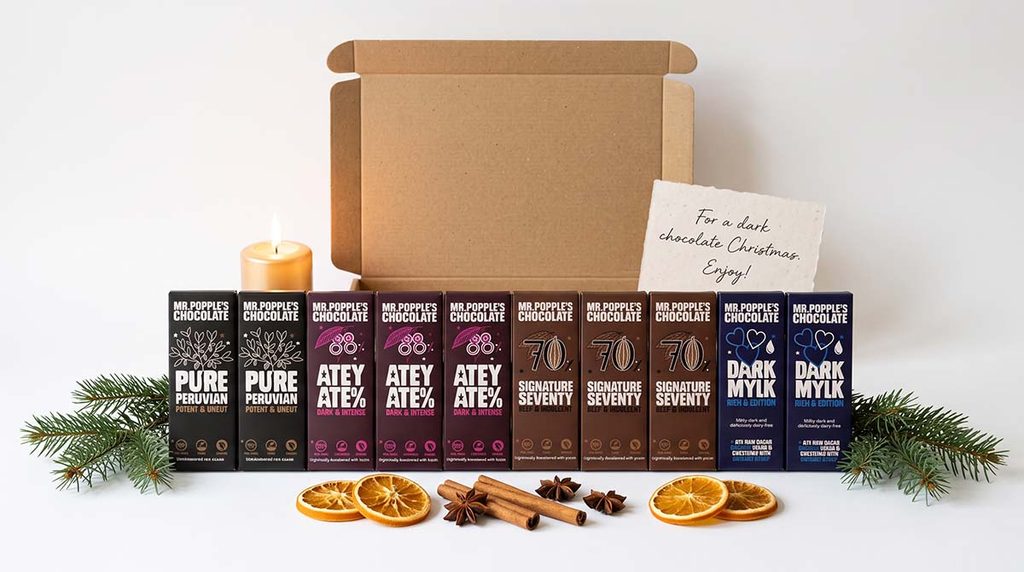
A Dark and Rich box for Christmas
Ten bars of our darkest chocolate, from the one-ingredient Pure Peruvian to the 61% Dark Mylk, sized for the letterbox.
Free UK delivery over £25 · Plastic-free packaging · Top 14 allergen free · BDA organic certified
Frequently asked questions
Does Mr Popple’s chocolate contain nuts? No. Every Mr Popple’s Chocolate bar is made with no nut ingredients, and no nuts or peanuts come on site. Every bar is free from the top 14 allergens and made in our dedicated vegan, dairy-free and nut-free facility, with ingredients from suppliers who don’t handle or sell nuts or anything containing them.
Are peanuts nuts? Not in UK allergen law. Peanuts and nuts are listed as two separate allergens among the 14 that must be highlighted on a label, so a product can be free from one and not the other. Mr Popple’s Chocolate keeps both out: no nuts or peanuts come on site, including staff and visitor food.
I have a nut allergy. What should I check before eating chocolate? Check the ingredients list and any allergen statement every time you buy, because recipes and labels can change. If a “may contain” label leaves you unsure, ask your GP or allergy specialist what’s right for you, as Anaphylaxis UK advises. Mr Popple’s Chocolate prints the full ingredients list on every wrapper.
Is a cacao bean a nut? No. Cacao beans are the seeds found inside the cacao pod, and cacao isn’t one of the eight tree nuts named in UK allergen law. At Mr Popple’s Chocolate we stone-grind unroasted cacao into every bar, in a facility where no nuts or peanuts come on site.