19 Jun 2024 | Comments Off on The Nutritional Benefits of 100% Dark Chocolate
By Ben Popple, founder of Mr Popple’s Chocolate · Updated June 2026 · 6 min read
🍫 The 60-second answer
100% dark chocolate is pure cacao with nothing else added, which means no sugar, no dairy, no fillers. Per 100g you get more protein, fibre, magnesium and polyphenols than any other type of chocolate, plus near-zero impact on blood sugar. The catch is that it’s intense, but the reward is all the good stuff that cacao can do for you, when nothing is getting in the way.
The first time most people try 100% chocolate, their face does a thing. It’s a small unguarded thing, somewhere between surprise and mild betrayal, as if the bar has personally let them down, and it’s a face I’ve watched at tastings for years without it ever getting old.
Then, about thirty seconds later, something else often happens, especially from the dark chocolate lovers. The chocolate warms on the tongue, the bitterness softens, and the actual flavour starts to come through – earthy, slightly fruity, a bit mineral. People look up, go back for a second piece, and start asking what they’re tasting.
That second moment is what 100% chocolate is for, and the reason it has any health credentials worth mentioning is fairly simple: everything that’s been added to “normal chocolate” has been left out, so what’s left is the bit the science papers were actually about.
Free UK delivery over £25 · Plastic-free packaging · Top 14 allergen free · BDA organic certified
What’s actually in 100% dark chocolate?
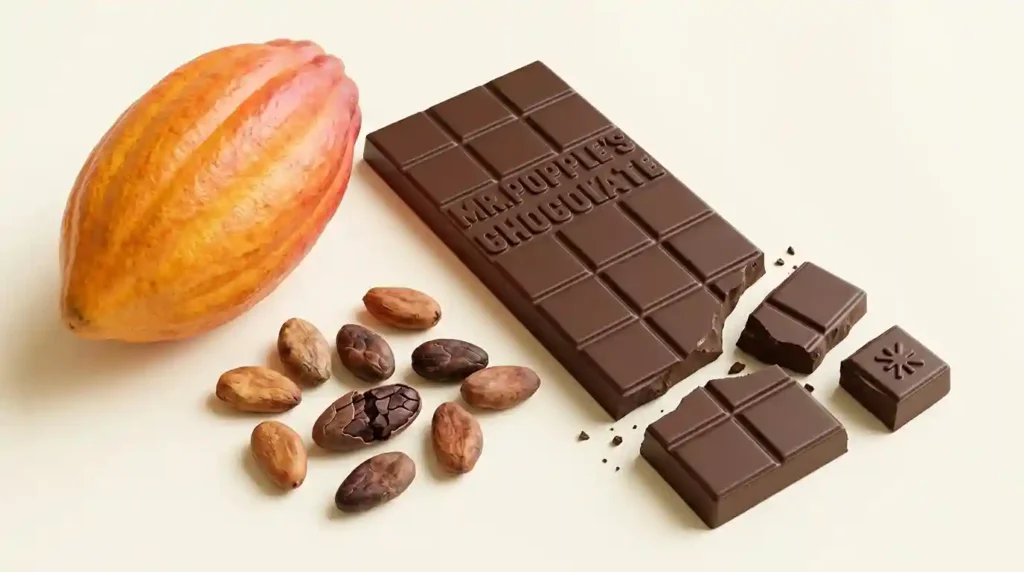
Two ingredients, both pressed from the same bean and ground back together: cocoa solids and cocoa butter. No sugar, no milk, no flavourings, no lecithin, no vanilla, no anything else. Most decent 100% bars list a single ingredient on the back, and that ingredient is cacao.
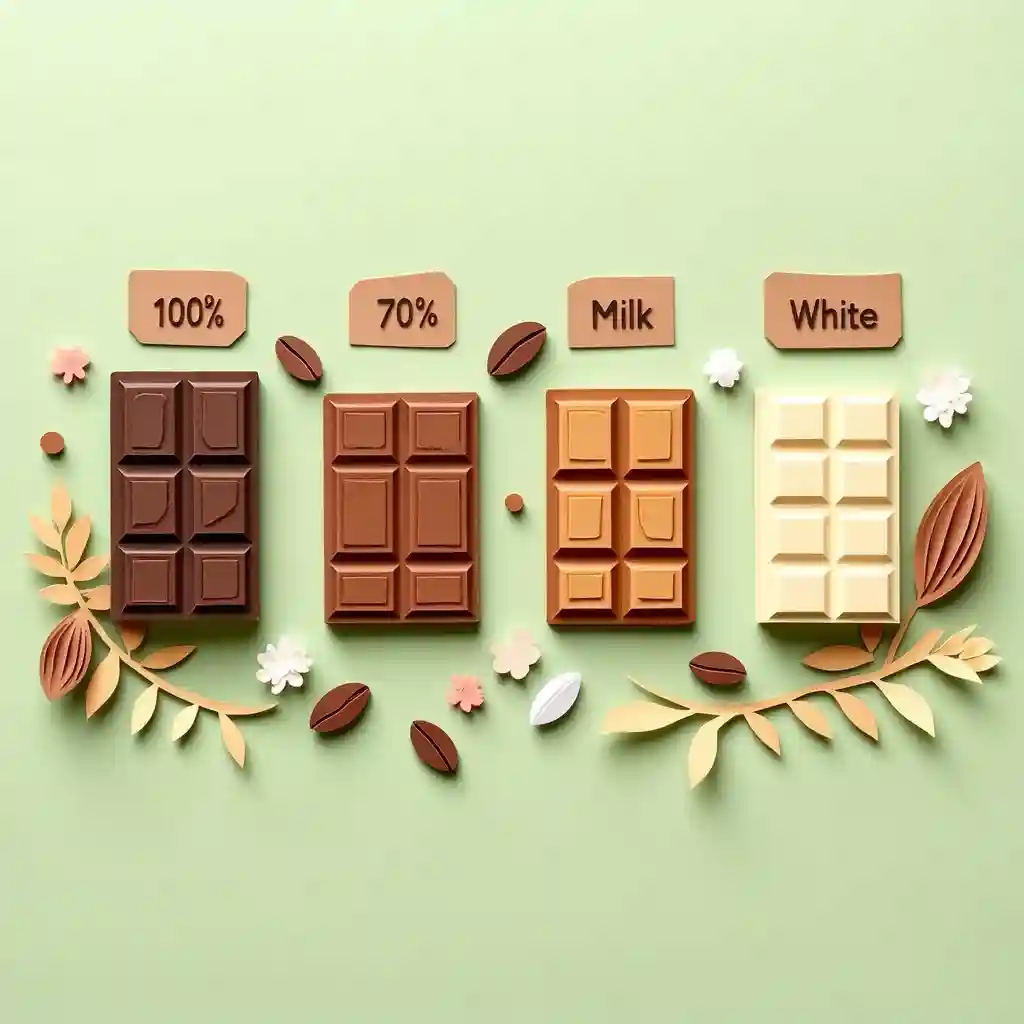
This sounds dull until you compare it to what the rest of the chocolate aisle lists. A standard 70% bar is 70% cacao and 30% sugar, while a milk chocolate bar is mostly sugar and dried dairy with some cocoa thrown in for branding purposes. White chocolate, technically, contains no cocoa solids at all – it’s cocoa butter, sugar and milk, pretending to be chocolate. Whatever you think of those as eating experiences, they’re a different food group nutritionally, and 100% chocolate is what you get when none of those extras are added in the first place.
🔍 Decoder: “100% chocolate”
A bar made only from cacao beans, pressed into cocoa solids and cocoa butter and ground back together. No sugar, no dairy, no soya lecithin, no vanilla. Sometimes called “unsweetened” or “baking” chocolate, though properly made versions are designed to be eaten as they are, not melted into a recipe.
Is 100% chocolate genuinely good for you?
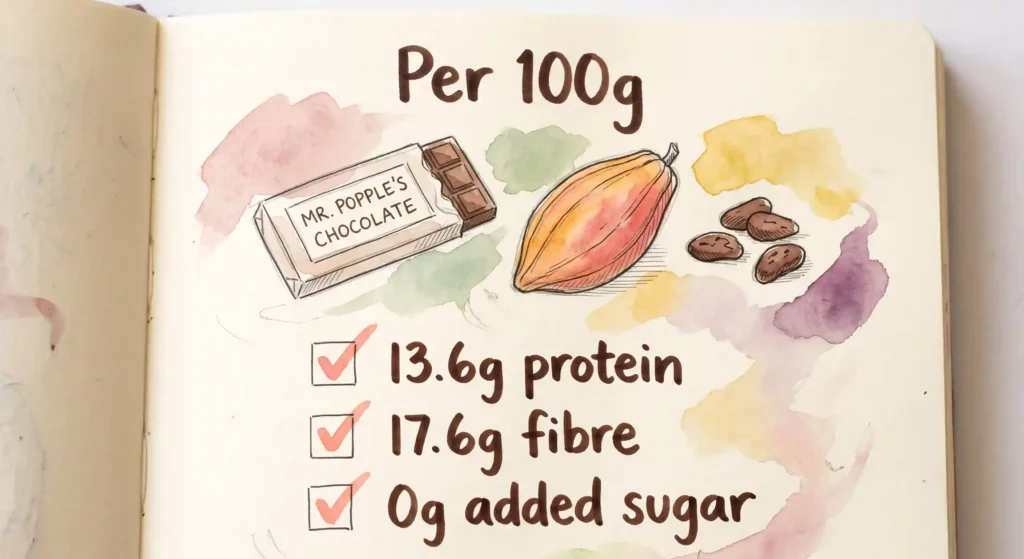
Yes, pretty solidly actually, and the numbers are the easy bit. Per 100g, our Pure Peruvian 100% delivers around 13.6g of protein, 17.6g of fibre, 230mg of potassium, 45.6mg of magnesium and 0.7mg of iron, plus a useful amount of copper and manganese. That puts it closer to a serving of beans than a pudding.
The fibre figure is the one most people don’t see coming, because 17.6g per 100g is more than most “high-fibre” breakfast cereals, and it’s the kind of fibre that feeds good gut bacteria, which is one of the under-talked-about reasons cocoa keeps showing up in health studies. It’s also a useful source of copper and manganese, two trace minerals your body needs for bone, blood vessel and immune function. None of this turns chocolate into broccoli, but it does mean the chocolate is giving the body something useful instead of just taking it for a sugar ride.
If you want the deeper science (flavanols, antioxidants, how they actually work in the body), our polyphenols and antioxidants in raw cacao guide goes there. The Oxford Brookes Centre for Nutrition and Health tested five UK dark chocolate brands and found Mr Popple’s came out top for polyphenols and antioxidants by a meaningful margin, which is what happens when you stop roasting the good bits out rather than adding anything special.
How does 100% compare to 70% or milk chocolate?
The simplest way to see the gap is the maths, since each square of 100% chocolate is, by definition, all cacao. Each square of 70% is 70% cacao and 30% other stuff (mostly sugar), and a square of milk chocolate is roughly 30% cacao and 70% other stuff. All the flavanols, theobromine, magnesium and iron live in the cacao part, so the rest of the bar isn’t adding nutritional value, it’s just taking up space.
Per 100g
100% dark
70% dark
Milk
White
Cocoa solids
100%
70%
10-50%
0% (cocoa butter only)
Sugar
0g added
25-30g
50-60g
50-60g
Protein
13-14g
7-8g
3-4g
4-5g
Fibre
17-18g
10-11g
1-3g
0g
White chocolate is the odd one out here, because it contains cocoa butter but no cocoa solids, and the solids are where the flavanols, theobromine and most of the minerals actually live. Whatever it tastes like, it doesn’t really count as nutritional chocolate at all.
There’s also a thing worth knowing about milk: dairy contains a protein called casein, which grabs onto flavanols in the gut and stops your body absorbing them properly. That’s why drinking milk after dark chocolate cancels out some of the heart benefits in studies, and it’s another quiet point in 100% chocolate’s favour, because there’s no dairy in it to start with.
Sugar is the loudest ingredient in most chocolate. At 100%, you can finally hear the cacao.
Does 100% chocolate help with heart health?
The cardiovascular research on cocoa is some of the cleanest food science we have, and 100% chocolate gives you the most of it per square. Cocoa flavanols help your body make nitric oxide, which keeps blood vessels relaxed and flexible, and the result of eating it regularly in small amounts is better blood flow and lower blood pressure.
The catch is the bit the chocolate industry doesn’t put on the front of the wrapper, because all of these benefits depend on the flavanols making it from the bean to the bar in one piece. Conventional chocolate gets roasted at 120-150°C, which destroys a lot of them, and the percentage on the front of the wrapper says nothing about what survived. Bitter and dark are not the same as flavanol-rich – a heavily roasted 100% bar can actually have fewer flavanols than a 70% bar that wasn’t roasted at all.
This is the whole reason the “flavanol-enriched chocolate” category exists in the first place: manufacturers process the flavanols out, then sell you an extract added back in at a markup. We’ve written about what “flavanol-enriched” chocolate actually means if you’ve ever wondered whether those bars are worth the price tag.
What about blood sugar and skin?
The blood sugar story is short and good. Normal chocolate spikes your blood sugar because it’s mostly sugar, but 100% chocolate doesn’t, and our Pure Peruvian 100% has zero added sugar plus only about 1g of natural sugar per 100g, all of it from the bean itself. The fibre and protein slow any response down even further, which makes it one of the only “chocolate” experiences that fits with low-carb, keto or diabetic eating.
The skin one is more recent and slightly unexpected. A controlled study found that high flavanol raw chocolate helped protect skin from UV damage, while low flavanol chocolate didn’t do the same thing – which is the same lesson all over again, because not all chocolate is created equally.
Across the board, the antioxidant case for unsweetened cocoa is solid and well-researched. None of which makes 100% chocolate a magic food, but the list of things it appears to help with is long enough to take seriously.
Why does the bean variety matter for nutrition?
Quietly, the bean is doing most of the work, and most chocolate isn’t using the good ones. Around 80% of the world’s cacao is Forastero, the bulk-volume bean grown for yield rather than flavour. Criollo cacao, by contrast, makes up only about 5% of global production. It’s harder to grow and gives smaller yields, but the polyphenol density is higher and the fat content tends to be too, which means more of cocoa’s helpful compounds per square and a smoother, less chalky mouthfeel.
The nutritional point is simple: a 100% bar made from Criollo isn’t just a different flavour experience, it’s a denser delivery of what makes cocoa worth eating in the first place. Most commercial 100% chocolate is made from commodity blends, which is why it tastes one-dimensional and feels gritty. The bean variety on the wrapper genuinely changes what you’re getting.
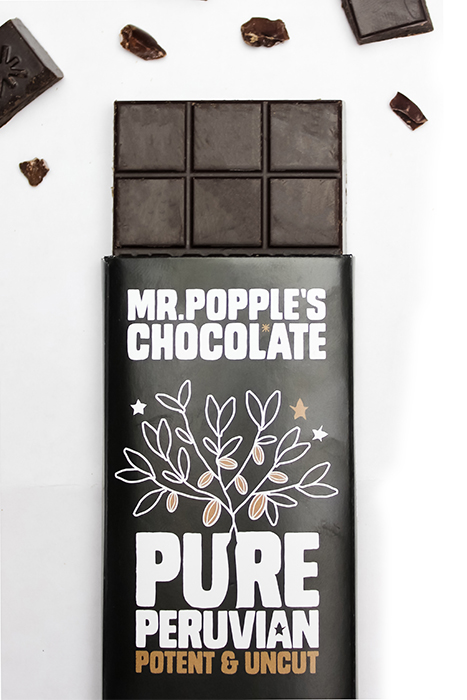
Our Pure Peruvian 100% is single-origin Criollo from a cooperative in northern Peru, fermented carefully, dried in the sun and stone-ground in our workshop at temperatures kept below 40°C. The good stuff stays in. If a brand tells you where their cacao came from, that’s a good sign, and brands that won’t tell you usually have a reason.
“100% chocolate isn’t difficult, it’s just honest. There’s nothing in there to hide behind.”
— Ben Popple, founder of Mr Popple’s Chocolate
Try the most honest bar in the aisle.
Mr Popple’s Pure Peruvian 100% chocolate is single-origin Criollo cacao, stone-ground at low temperature, with nothing else added. Independently tested by the Oxford Brookes Centre for Nutrition and Health and found to contain more polyphenols than four leading UK dark chocolate brands.
Free UK delivery over £25 · Plastic-free packaging · Top 14 allergen free · BDA organic certified
Key terms, briefly
Cacao vs cocoa – “Cacao” usually means the raw, unprocessed bean, while “cocoa” usually means the roasted, more processed version. Same plant, different journey.
Flavanols – The most-studied helpful compounds in cocoa, a type of polyphenol, linked to better blood flow, lower blood pressure and better blood sugar response. How much of them survive depends on how hot the chocolate got during processing.
Theobromine – A natural pick-me-up compound in cocoa, a bit like caffeine but milder and longer-lasting, and particularly strong in 100% chocolate. The reason cocoa gives you a small lift.
Cocoa solids – The non-fat part of the cacao bean, where most of the goodness is. When a bar says “70% cocoa”, that’s the combined total of solids and butter, but the solids do most of the heavy lifting.
Stone-grinding – A slow, low-temperature way of grinding cacao that keeps the natural compounds intact – the patient, more expensive opposite of the high-heat industrial method.
Frequently Asked Questions
Is 100% dark chocolate sugar-free? Yes, as long as it’s a proper 100% chocolate, in which case it has no added sugar of any kind. It will have a tiny amount (about 1g per 100g) of natural sugar from the bean itself, but no refined sugar at all, which makes it fine for low-sugar, keto and diabetic eating.
How much 100% chocolate should I eat per day? Most research on cocoa’s heart benefits is based on 6-25g a day, which works out as two to six lines of a 35g bar. Eating more than that doesn’t give you proportionally more benefit, and the fat and calories start to add up.
Does 100% chocolate contain caffeine? A tiny amount, yes, plus theobromine, which is a natural stimulant related to caffeine but milder, slower to wear off, and not addictive.
Is 100% dark chocolate vegan? Pure 100% chocolate contains only cacao, so it’s naturally vegan, but always check the label because some “100%” branded products sneak in milk powder or whey, or can’t guarantee there aren’t traces of either. Mr Popple’s bars are certified vegan and top 14 allergen free.
Why is 100% chocolate so bitter? Cacao is bitter on its own, and the compounds that make it healthy (the flavanols and theobromine) are also the ones that taste bitter. Sugar in normal chocolate covers this up, while 100% doesn’t, which is why it tastes more intense at first but more interesting once your palate gets used to it.
What’s the difference between 100% chocolate and cocoa powder? Cocoa powder is what you get when most of the cocoa butter is pressed out of the bean, whereas 100% chocolate keeps the solids and the butter together. That’s why you can eat it like a bar instead of having to dissolve it into something. Same starting plant, different finished products.