
Sub-Total: £0.00

Why Eat 100% Chocolate? An Honest Case
First published 17 Jun 2026|Last Updated 03 Oct 2026
By Ben Popple, founder of Mr Popple’s Chocolate · Updated October 2026 · 8 min read
🍫 The 60-second answer
Why eat 100% chocolate when so much of it is bitter and one-note? A lot of it earns that reputation. Made well, though, it’s a different food altogether: small batches of fine-flavour organic cacao, stone-ground for around three days and never warmed above 42°C, so there’s nothing to hide behind.
Rather taste than read? Pure Peruvian is the 100% bar we make, from single-origin Criollo, and the rest of our organic raw vegan chocolate bars offer a gentler start.
I’ll be honest with you, because there’s no other way to start a piece like this. My first 100% bar was made from average cacao, and it tasted exactly like that: bitter, flat and missing all the subtlety I’d hoped to find. I knew from working with unroasted cacao that it could be better, and it took months of trying different cacaos before I found the Criollo I use now.
That first bar tasted the way a lot of 100% chocolate tastes, and it’s the reason the stuff has such a grim reputation. So why eat 100% chocolate at all, if the first bite can feel like a small punishment?
Because the cacao changes everything. A 100% bar made from a good bean settles as it warms, and underneath the bitterness there’s fruit, a hint of caramel and a flavour that sweeter chocolate never gets near. Here’s the case for it, made fairly.
A lot of 100% chocolate really is hard to love
A lot of 100% chocolate deserves its grim reputation. Made from bulk beans and roasted hard, it can taste chalky, sour and flatly bitter, more like cocoa powder pressed into a brick than something you’d choose to eat. That experience is real.
Here is the bit the health-food aisle tends to skip: bitterness isn’t a sign of quality, and it can just as easily be the sign of a cheap bean treated badly, grown for yield, fermented in a hurry and roasted hard to bully some consistency into it. When people tell me they “tried 100% once and never again”, I understand completely, because they tried the wrong one.
None of that is inevitable, though. A 100% bar can be bright and fruity and almost creamy, and once you’ve tasted one of those, it’s hard to go back to the supermarket kind.
Curious where to begin? Our Pure Peruvian 100% bar is single-origin Criollo, kept raw, and a far gentler introduction than most.
Pure cacao: the whole point is what isn’t there

Most dark chocolate contains some added sugar, but a 100% bar is pure cacao and nothing else: no sugar, no dairy, no flavourings, no lecithin. Below 100%, the rest of the bar is room for sugar and other additions. Nothing dilutes the bean or hides a poor one, so a 100% bar tastes of exactly the cacao it was made from, and of how carefully that cacao was handled. That, more than any list of health benefits, is a good reason to eat it.
🔍 Decoder: “100% chocolate”
Chocolate made only from the cacao bean – its cocoa solids and cocoa butter – with no sugar or anything else added. You’ll also see it called “unsweetened chocolate”, “100 percent dark chocolate” or “ceremonial cacao”, and good versions are made to be eaten as they are, not just melted into a recipe..
The health benefits of dark chocolate can get oversold sometimes, so here’s the honest part. People often tell me they’ve heard anything 70% and over is good for you, and I agree it’s much better than milk chocolate. A 70% bar is 70% cacao, though, which leaves room for up to 30g of sugar in every 100g.
If you’ve ever wondered what the cocoa percentage on a chocolate bar means, that’s the short version: the percentage is the cacao, and by 100% there’s no room left for added sugar. A lot of chocolate is a sugar delivery system that happens to taste of cocoa, and a 100% bar hands you the bean and leaves it at that.
What you get when you eat 100% chocolate
A 100% bar is as much cocoa as chocolate gets, and cocoa is where the flavanols are. Those are the plant compounds behind one of the few health claims European regulators have accepted for a food: 200mg of cocoa flavanols a day helps maintain the elasticity of blood vessels, which contributes to normal blood flow.
Translated from regulator-speak, the finding is about a measured daily amount of cocoa flavanols, which no bar can promise without testing for it. How much survives depends a great deal on how the beans are treated, which is why we never roast ours (more on heat below).
The rest of the story is on the label. Our Pure Peruvian 100% has 22.1g of fibre and 12.5g of protein per 100g, and just 1.0g of sugars, all of it naturally occurring, because the chocolate contains no added sugar. That makes it low sugar and keto-friendly, with no sugar crash waiting at the end of the square.
I won’t run through every figure, because we’ve covered the nutritional benefits of 100% dark chocolate in a separate article.
Your head may notice the cocoa
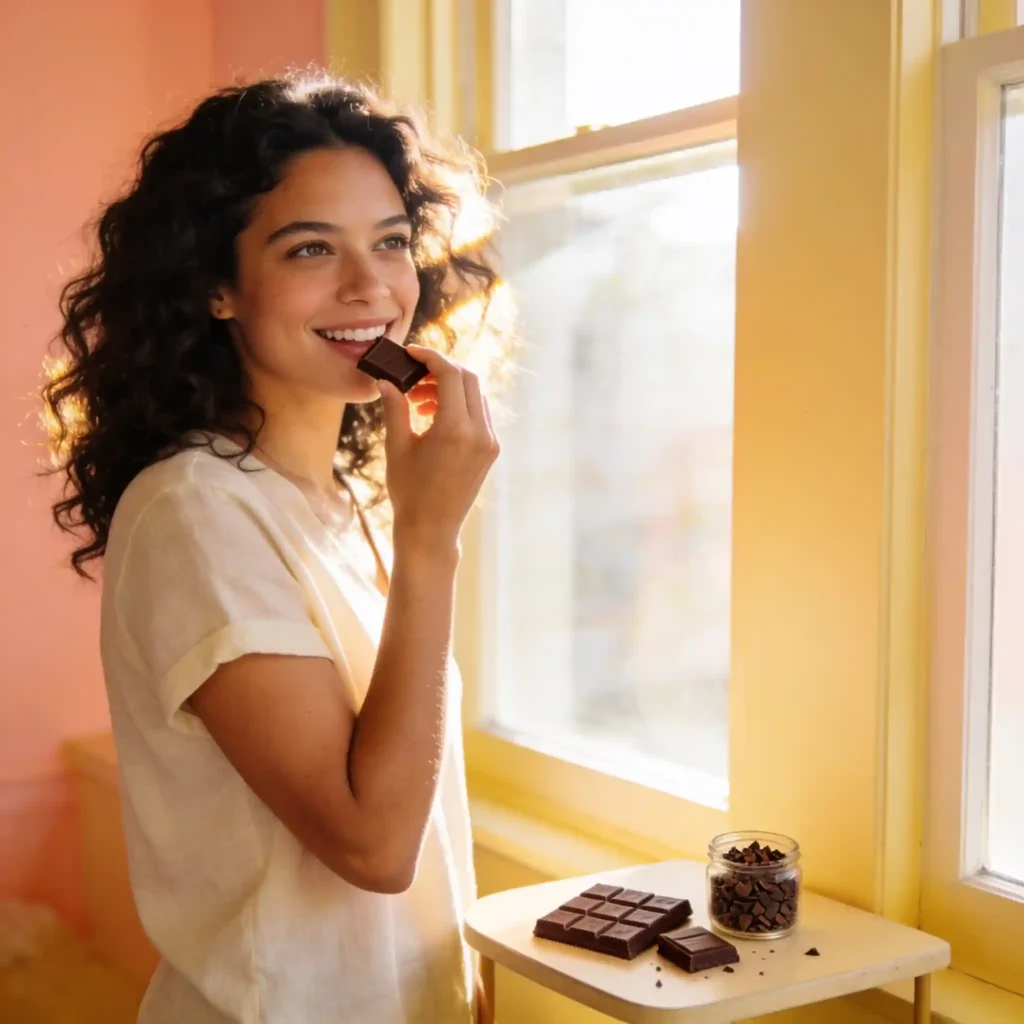
Cocoa contains theobromine, a milder relative of caffeine. Research describes its effects as less stimulating than caffeine’s but longer lasting, because theobromine stays in the body for longer, which may be why people describe dark chocolate as a softer sort of lift than coffee rather than a jolt.
When I eat good raw chocolate, especially 100%, my head clears, my body finds a second wind, and something in my heart lifts and opens, a bit like someone opening the window on a stuffy afternoon.
I eat it as much for how I feel as for the taste. If flavour were all that mattered, a decent bulk-bean 100% would do the job for much less. What you’re paying for here is the care: small batches, never roasted, stone-ground for 60 to 80 hours.
“Cacao doesn’t hit you like coffee. It just serves you a much more pleasant afternoon, and forgets to send the bill”
– Ben Popple, founder of Mr Popple’s Chocolate
The cacao bean does most of the work
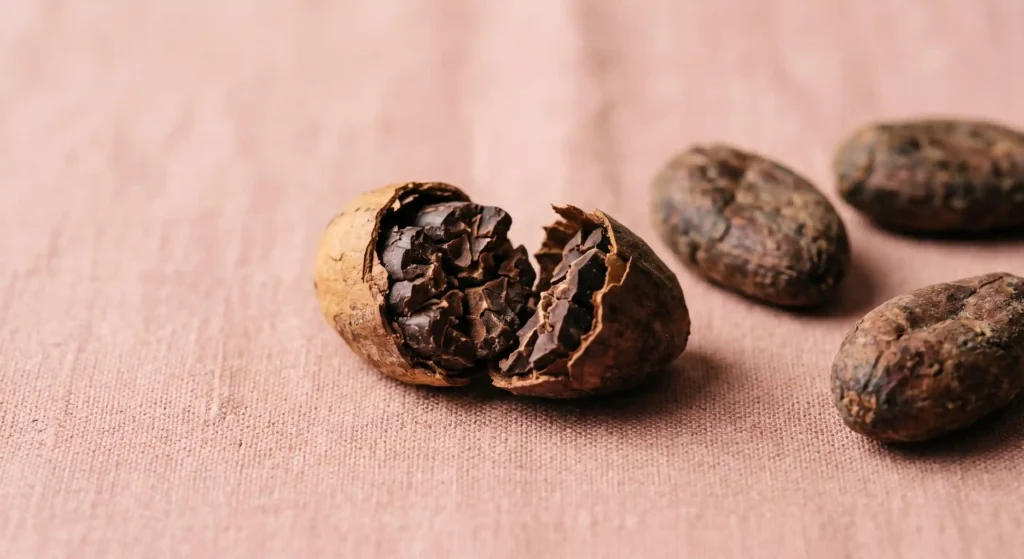
Almost everything good or bad about a 100% bar is decided by the bean before it’s even made. A bean grown for flavour gives the bar something to say, while a bean grown for volume and roasted hard leaves it with little but bitterness, which is why the variety matters as much as the percentage.
We build every bar around Criollo, the rare fine-flavour variety some call the prince of cacaos. It’s a delicate tree that crops lightly and needs more looking after than the tougher, higher-yielding (but blander-tasting) varieties most chocolate is made from, and the International Cocoa Organization puts all fine or flavour cocoa together at just under 5% of world production.
What makes it worth seeking out is the flavour: notes of dried fruit and a soft floral edge. It’s the difference between my first 100% bar and the ones I make now. The number on the label tells you how much cocoa is in the bar, but nothing about whether it’s quality cacao worth eating.
Try the most honest bar in the aisle
Our Pure Peruvian 100% is single-origin Criollo cacao, kept raw and stone-ground below 42°C, with one ingredient and nothing to hide behind. Independently tested by the Oxford Brookes Centre for Nutrition and Health, which placed it top of five leading UK dark chocolate brands for polyphenols and antioxidants.
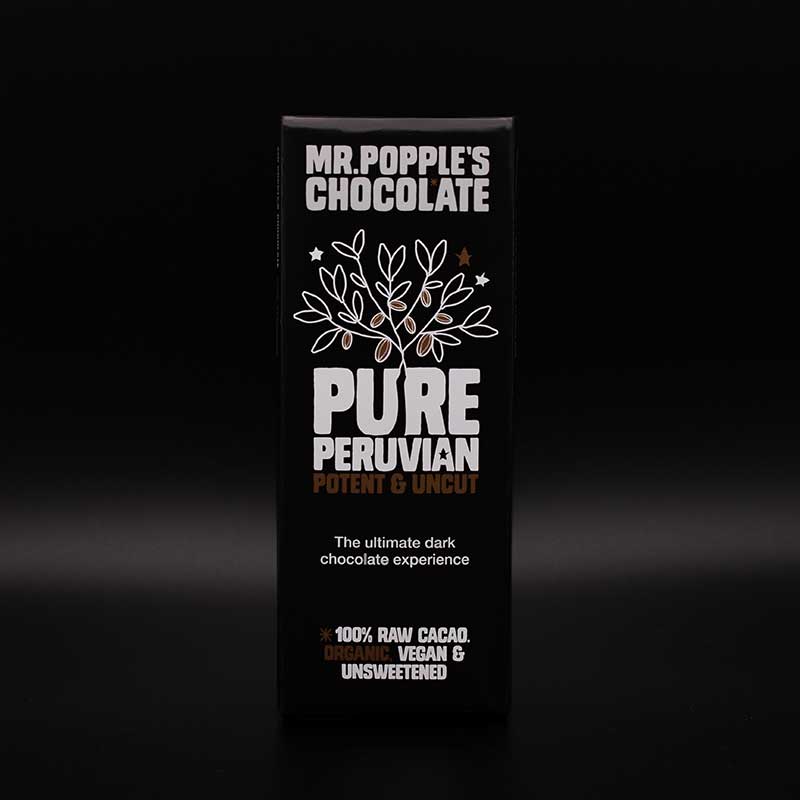
Or browse our full range of organic raw vegan chocolate bars if you’d like a gentler place to start.
Free UK delivery over £25 · Plastic-free packaging · Top 14 allergen free · BDA organic certified
Who 100% chocolate is for, and who it isn’t
100% chocolate suits the way plenty of us want to eat now: less sugar, food that does more than one job, and a little more attention at the table. You can’t bolt a square of 100% like a biscuit, which is no bad thing in a week that mostly happens at speed.
Who this is for
Anyone cutting sugar who still wants something that feels like a treat, not a punishment
Curious palates who like coffee, wine or any intense flavour with a bit of bitterness
People who’d rather have one really good square than half a sweet bar
Who it probably isn’t for
Anyone after a quick, sweet, mindless nibble (a 70% is a kinder first step)
Committed sweet tooths who’d rather their chocolate came with a caramel centre
Anyone unwilling to give it the time it needs to win them over
Not ready for 100%? Signature Seventy, our original 70% raw cacao bar, is sweetened with yacon syrup and makes a softer way in.
🍫 Did you know?
Plenty of people don’t enjoy their first coffee, their first olive or their first sip of tonic water. Bitter can be an acquired taste, learned a little at a time, and some people find their palate drifting towards the darker end of the chocolate shelf once they give it a fair chance
Ways to enjoy 100% chocolate, and a few good pairings
The best ways to enjoy 100% chocolate involve a pairing that matches its depth or lifts its fruit. Black coffee and dark chocolate pair well, and so does strong tea, while raspberries or a few raisins bring out the dried-fruit notes in a good Criollo bar.
Finding a 100% dark chocolate bar that’s worth your time
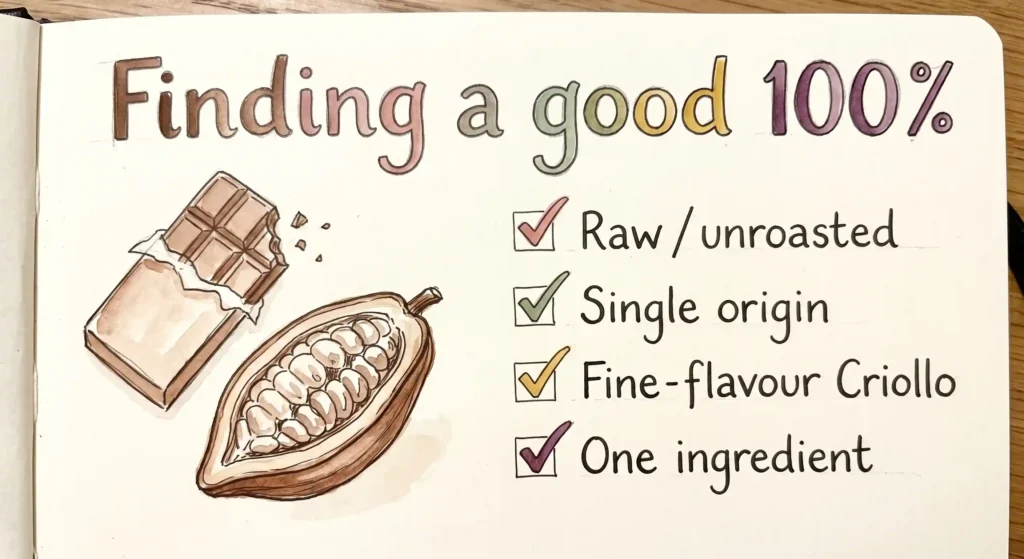
If you’re going to try 100%, the percentage on the front is the least useful thing about it. What matters is what you can learn about the cacao: whether it’s raw or roasted, where it’s grown, and whether it’s a fine-flavour bean like Criollo. Those three things separate a bar you’ll come back to from a doorstop.
Heat is the less obvious villain. Most chocolate makers roast their cacao, and a study that roasted cocoa beans at 110 to 150°C found roasting significantly reduced their flavan-3-ols, the main family of cocoa flavanols. That’s why we keep our cacao below 42°C from start to finish and stone-grind it slowly rather than blasting it with heat.
“A 100% bar has nowhere to hide. There’s no sugar in there to cover anything up, so the only way to make a good one is to start with a good bean and treat it with care. Everything else is just honesty, in chocolate form”
– Ben Popple, founder of Mr Popple’s Chocolate
Which brings me back to that first 100% bar of mine, made from average cacao. I could have given up on 100% chocolate there and then, and if you’ve ever wondered why eat 100% chocolate at all, the answer is in what came next: better cacao, treated with care. Pure Peruvian is still the bar I’m proudest of, because the first bite asks something of you and the rest of them pay you back.
Frequently Asked Questions
Is 100% chocolate actually good for you?
It can be a sensible treat. 100% chocolate is pure cacao with no added sugar, and cacao contains flavanols, which regulators accept help maintain the elasticity of blood vessels at 200mg a day. It isn’t a health supplement, though, and it’s still rich in fat and calories, so think of it as a better treat rather than a health food.
How do you eat 100% chocolate if it’s so bitter?
Slowly. Let a small piece melt on your tongue rather than chewing it, and give it about thirty seconds. The first hit of bitterness fades and the fruitier, rounder flavour comes through underneath. Starting with a carefully made bar from a fine-flavour bean makes an enormous difference, since cheap 100% is far harsher.
Is 100% chocolate the same as cooking or baking chocolate?
Not quite. Baking chocolate is also unsweetened, but it’s usually made from cheaper beans and designed to be melted into recipes, not eaten. A good eating 100%, like Pure Peruvian from Mr Popple’s Chocolate, is made from fine-flavour Criollo cacao to taste good on its own, though it works beautifully in cooking too.
Is all 100% chocolate vegan?
Pure 100% chocolate is just cacao, so it’s naturally vegan and dairy-free. Always check the label, though, because a few products labelled “100%” sneak in milk powder or can’t rule out traces. All Mr Popple’s Chocolate bars are certified vegan, palm-oil free and free from the top 14 allergens.
Is Mr Popple’s 100% chocolate any good, and do people like it?
Mr Popple’s Chocolate is rated 4.6 on Trustpilot, 5.0 on Google and 100% recommend on Facebook. Our Pure Peruvian 100% was also independently tested by Oxford Brookes Centre for Nutrition and Health: significantly higher polyphenol content than 4 other leading UK dark chocolate brands, and the highest average antioxidant capacity of the five bars tested.
📖 Read next
Dark chocolate percentage explained – why 70%, 88% and 100% taste so different
Chocolate with high levels of polyphenols and antioxidants – what to look for if that’s why you’re here
Why choose Criollo cacao chocolate – the rare bean that makes a 100% bar worth eating
Last updated: October 2026