
Sub-Total: £0.00

How to Make a Cacao Drink: The Perfect Cup, Every Time
First published 19 Jun 2026|Last Updated 19 Jun 2026
By Ben Popple, founder of Mr Popple’s Chocolate · Updated June 2026 · 6 min read
🍫 The 60-second answer
To make a cacao drink, heat water until hot but not boiling, add 20g to 30g of raw chocolate in small pieces, and froth it hard for approx. 15 – 30 seconds until smooth, then add warm plant-based milk. The one rule that matters is the whisking. Raw cacao with no emulsifier will not melt smoothly with a spoon.
I make a cup of cacao most mornings, in place of coffee, and have done for years. In that time I have made just about every mistake there is: too bitter, too weak, and the worst one of all, a mug with a sad layer of grit at the bottom and an oily film floating on top. So let me save you those first sorry attempts and take you straight to a cup that is rich, warming and properly frothy.
There is really only one rule that makes or breaks it, and almost nobody mentions it. So let me start there.
The one mistake that ruins your cup
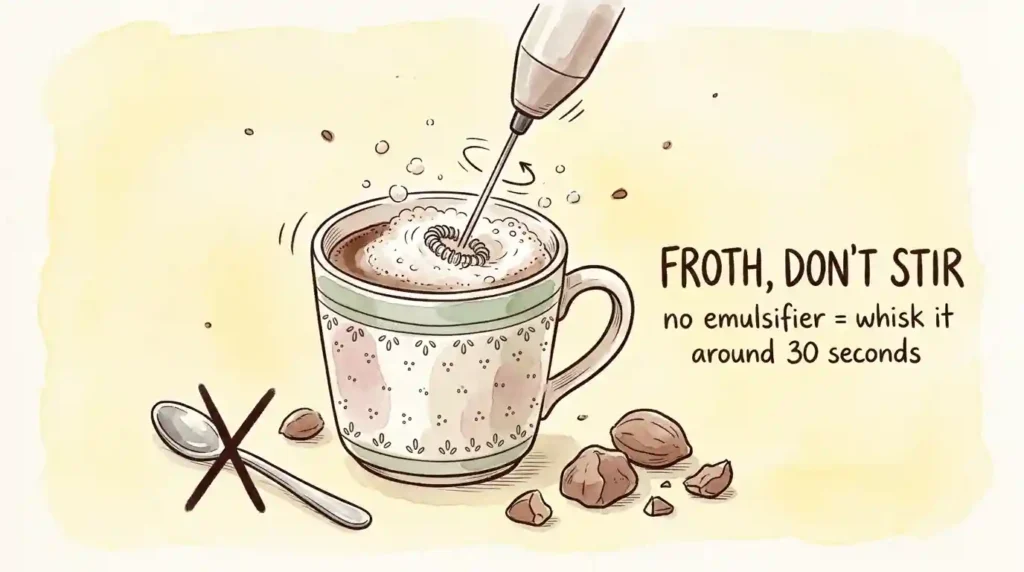
The thing nobody tells you is this: proper raw chocolate is made with no emulsifier at all, so it will not simply dissolve into hot liquid the way instant hot chocolate does. Drop a piece into hot milk, stir with a spoon, and you get grease and grit. It has to be frothed.
🔍 Decoder: “emulsifier”
An emulsifier is an additive, often soya lecithin, that helps fat and water mix. Instant hot chocolate relies on it. Our chocolate has none, so you do the work yourself, with a whisk or frother.
That additive is exactly what lets cheap drinking chocolate combine with a quick stir. We leave it out, along with refined sugar and anything artificial, which is wonderful for purity but means the cocoa butter and the water genuinely will not combine on their own without mechanical mixing. Beat them hard enough, for long enough, and the cocoa butter emulsifies into something glossy and smooth. This is the whole secret, and it is the reason we keep our chocolate raw and unadulterated. Get this right and everything else is easy.
What you need
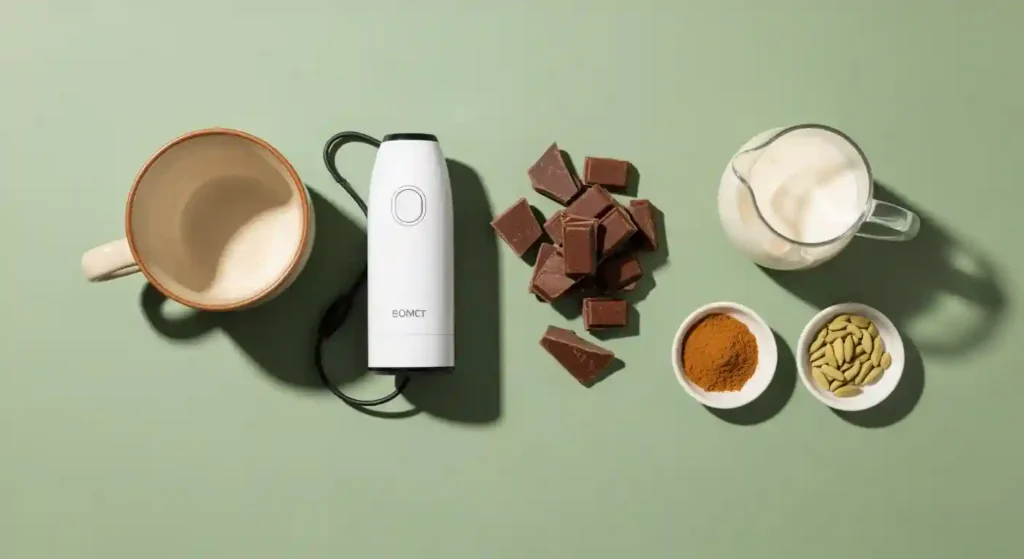
Making a good cup is wonderfully simple, but two things matter more than the rest: genuinely good cacao, and a way to froth it properly. Everything else is to taste. Here is the short list before we get to the method.
- 20g to 30g of raw chocolate per person, in small pieces (our cacao drink chunks, or a chopped or grated bar)
- Half a cup of hot, not boiling, water per person
- Half a cup of your milk of choice per person (oat milk, almond milk or coconut milk all work; oat is my favourite)
- A milk frother, a small whisk, or a dedicated hot chocolate maker
- Optional: a sprinkle of cinnamon, a pinch of cayenne, a little vanilla, or your sweetener of choice
Quality really does tell here. We use single-origin Peruvian Criollo, kept below 42C, so the flavour is fruity and complex rather than flat and bitter. You can read more about why we choose Criollo cacao if you fancy a deeper dive.
How to make a cacao drink, step by step
Use 20g to 30g of cacao per person, heat the liquid until hot but not boiling, and froth thoroughly for approx. 15 – 30 seconds before adding milk. This is my go-to cacao recipe, the one I make most mornings, and it takes about five minutes from start to first sip. A few tips for making it well, before you begin: smaller pieces melt faster, and patience with the frothing pays off.
- Measure your cacao. Use 20g to 30g per person for a light-to-medium cup, roughly three-quarters of a small bar. More for a richer, more intense drink, less for something gentler. For reference, the dose commonly used in a cacao ceremony sits a little higher, around 35g to 45g.
- Heat your water. Warm half a cup of water per person until hot but not quite boiling. Boiling water can scald the cacao and dull its flavour, so ease off just before the bubbles. Adding the hot water first, before any milk, helps it melt and loosen.
- Add the cacao in small pieces. Break, chop or grate it so it melts and blends quickly. The little individual squares are fine as they are.
- Froth thoroughly. Mix the cacao hard forapprox. 15 – 30 seconds, until fully blended and a little foam forms on top. In Mexico this is traditionally done with a carved wooden whisk called a molinillo, rolled between the palms. A modern frother does the same job. This is the step that matters most, so keep going.
- Add your milk. Pour in half a cup of your milk of choice and keep frothing as it warms. I love a 50/50 blend of water and oat milk, which I find sweet enough as it is.
- Slow down and enjoy. Wrap your hands around the mug and take five minutes for yourself. Half the pleasure is in the pause.
That is genuinely all there is to make cacao at home: good chocolate, hot water, and a proper froth.
Which kit makes the best cup?
Because the frothing is everything, your tool matters more than your recipe. A dedicated hot chocolate maker is the most convenient, a handheld milk frother is the most effective for the money, and a spoon, I cannot stress this enough, does not work at all.
Here is my honest take after years of daily cups.
- Hot chocolate maker (Velvetiser, Salter Chocolatier): heats and froths for you, press and walk away. Pricier, and one more gadget on the worktop. Soak the cacao in the hot water first, then add milk.
- Handheld milk frother (around £10, USB rechargeable): perhaps the most effective of the lot. It takes a touch more effort by hand, but produces a richer, foamier cup than the machines do in my experience. Brilliant value.
- Blender: excellent for a thick or iced version, just take care not to seal hot liquid in a closed jug. Add everything and blend until frothy.
- A spoon: leaves it grainy and greasy. Do not bother.
So if you are starting out, do not feel you need to spend big. A tenner gets you a better cup than you would expect.
How to flavour and sweeten it
If your cacao is already lightly sweetened, as our yacon-sweetened cacao drink chunks are, most people need add nothing at all. If you are using pure 100% cacao, a little natural sweetness and a pinch of spice transform it. Treat the recipe as a base and play.
For sweetness, maple syrup, agave, coconut sugar, a chopped date blended in, or a spoon of low-GI yacon syrup all work beautifully, so use whichever sweetener of your choice you keep in the cupboard. For flavour, a sprinkle of cinnamon, a little cardamom, a tiny pinch of cayenne, a little vanilla or a pinch of salt all lift a cup wonderfully. It is a forgiving drink, and it rewards a bit of experimenting.
Why drink cacao instead of coffee?
This is why I made the switch in the first place. Cacao does not hit you like coffee. Its lift comes mainly from theobromine, a gentler, longer-lasting relative of caffeine that occurs naturally in the cacao bean. Theobromine lingers in the body far longer than caffeine does, with a half-life of around 7 to 12 hours against caffeine’s 2.5 to 5, and a cup carries only a fraction of coffee’s caffeine, roughly 2 to 7mg versus 70 to 140mg. The result, for us at least, is energy without the jitters, and no mid-morning crash. As I like to put it, cacao just serves you a much more pleasant morning, and forgets to send the bill.
There is a feeling to it, too, that I notice every day. We find a cup leaves us lighter in heart and mind, more inclined to enjoy other people’s company, and with a little extra spring in our step. It is also a genuinely good source of magnesium, far more than coffee gives you. And because we keep the cacao raw and never roast or dutch it, we hold on to more of cacao’s beneficial compounds: a study by the Oxford Brookes Centre for Nutrition and Health found our raw bars contain 18 to 36% more polyphenols and 23 to 43% higher antioxidant capacity than four leading UK dark chocolate brands, which fits the wider science showing that flavanols are lost as roasting temperatures climb. You can read more about the science of raw cacao if you would like the full picture.
How to make ceremonial cacao
Ceremonial cacao is made much like the cup above, just stronger and slower. In its purest form it is pure cacao paste with no sweetener, so use a fuller dose, somewhere between 25g and 45g per person depending on who you ask, beat it into hot water, and take your time over it. The cacao itself does not change. What changes is the intention you bring to it.
There is no single agreed ceremonial dose, which I rather like. Some guides pour a gentle 25g, others a full 42g for a longer, more immersive sitting. Both the Mayan and Aztec cultures drank pure cacao with intention, and many people today describe a ceremonial cup as warming and heart-opening. We would never claim a drink does the work for you, but there is something genuinely lovely about preparing your cacao slowly, sitting with a strong cup, no screen, no rush, and simply slowing down. Whether you call it a ceremony or just a good morning, the recipe is the same. If you would like the history, we have written about cacao’s place in Mayan culture.
Ready to make your own?
Our raw cacao drink chunks are 70% organic Peruvian Criollo, naturally sweetened with yacon, and made for exactly this chocolate drink. Froth, sip, and turn an ordinary morning into something better.
Free UK delivery over £25 · Plastic-free packaging · Top 14 allergen free · BDA organic certified
Frequently Asked Questions
How much cacao should I use per cup?
Use 20g to 30g of cacao per person for a balanced cup, roughly three-quarters of a small bar. Increase it for a richer, more intense drink, or reduce it for something lighter. The dose used in a traditional cacao ceremony is a little higher, around 35g to 45g. If your cacao is sweetened, like Mr Popple’s Chocolate yacon-sweetened chunks, you will not need to add anything else.
Can I make it without a frother?
You do need something that froths or blends, because raw cacao has no emulsifier and will not melt smoothly with a spoon. A handheld milk frother costs around £10 and does a brilliant job, and a blender works well too, especially for a thicker or iced version.
Why is my cup gritty or greasy?
Almost always because it was not frothed enough. Mix or blend it for approx. 15 – 30 seconds until fully combined and a little foam forms. Using water that is hot but not boiling, and adding the cacao in small pieces, both help it come together smoothly.
Is a cup of cacao better for me than instant hot chocolate?
A cup made from raw cacao keeps far more of the natural goodness than instant hot chocolate, which is usually made from cocoa powder with added sugar. Mr Popple’s Chocolate is made raw, below 42C, with no refined sugar, and an Oxford Brookes Centre for Nutrition and Health study found our bars have 23 to 43% higher antioxidant capacity than four leading UK dark chocolate brands.
Can cacao really replace my morning coffee?
Many people drink it that way, including me. The lift comes from theobromine rather than a big hit of caffeine, so the energy tends to feel calmer and more sustained, without the spike and crash. It is the reason I reach for a hot cacao most mornings.
Last updated: June 2026