
Sub-Total: £0.00

Why Do You Actually Crave Chocolate?
First published 01 Oct 2024|Last Updated 08 Jun 2026
And How to Satisfy It Without the Sugar Crash
Updated June 2026 · 8 min read · Properly researched, no diet-culture nonsense

Key Takeaways
- Chocolate cravings are real and rarely just “willpower”. There is genuine biology behind them.
- Common triggers include stress, hormonal shifts, nutrient gaps (especially magnesium), and pure habit.
- The wrong response (a sugary milk chocolate bar) often makes the craving cycle worse, not better.
- Mindful indulgence with high-cocoa, naturally sweetened chocolate satisfies cravings far more effectively than sugar.
- Hot chocolate, baked goods, and proper portion-paced bars are all legitimate craving-management tools.
- A small daily square of something genuinely good beats a fortnightly binge every time.
The honest answer first
If you regularly find yourself standing in front of the cupboard at 9pm, doing battle with your own brain, you are not weak. You are not broken. You are responding to a perfectly understandable mix of biology, psychology and habit.
The trouble is that the standard solutions (“eat more vegetables”, “drink water”, “just don’t”) are mostly useless for actual humans living actual lives. What works is understanding what your craving is actually telling you, then giving it something that genuinely satisfies the underlying signal. Often, that is chocolate. Just better chocolate, eaten more thoughtfully, in smaller amounts.
The next 8 minutes will explain the science of why you crave it, what the craving actually means, and a handful of genuinely practical ways to manage it. Including a few rather lovely recipes.
Why your brain wants chocolate (and isn’t being silly)
Chocolate cravings get a bad rap as some kind of moral failing. They are not. They are a physiological response involving real chemistry. Here is what is actually going on.
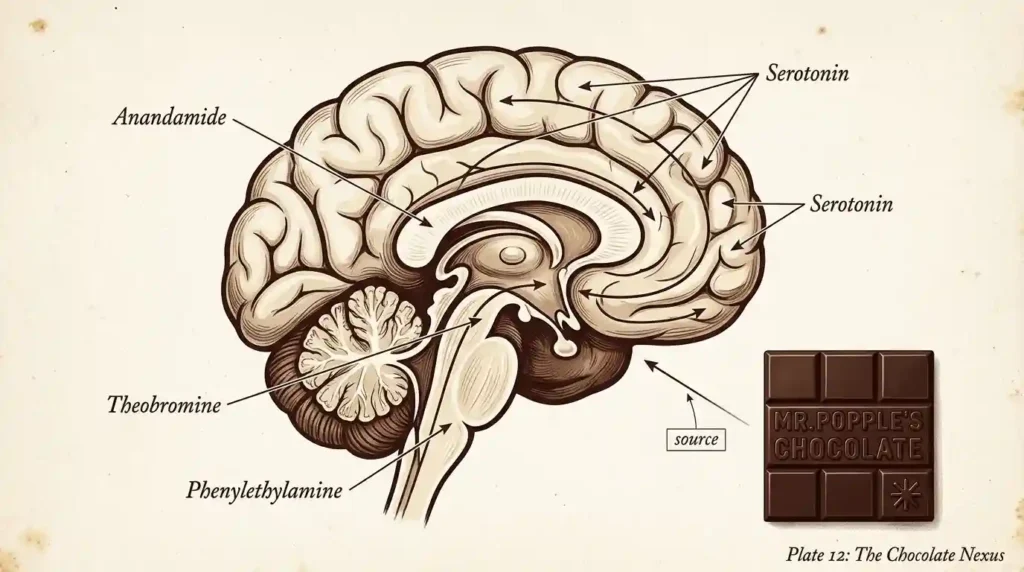
The mood-boosting compounds
Real, high-quality cocoa contains a fascinating little cocktail of compounds that genuinely affect how you feel:
- Theobromine is a mild stimulant in the same family as caffeine, but gentler. It gives you a long, smooth lift rather than a short jittery one.
- Phenylethylamine (PEA) is sometimes called the “love drug”. It triggers the release of endorphins and dopamine, which is the chemistry behind that “ahh, that’s better” feeling.
- Anandamide is nicknamed the “bliss molecule” because it produces feelings of euphoria and well-being.
- Tryptophan is the amino acid your body uses to make serotonin, the natural feel-good chemical.
Your brain remembers all of this. So when you are stressed, tired, or run down, it quite reasonably reaches for the thing that has reliably made you feel better in the past.
The trouble is, what your brain is actually after is the cocoa – and not all chocolate gives you much of it. A few squares of high-cocoa raw chocolate deliver the full cocktail of mood-boosting compounds in concentrated form. A whole bar of standard sugary milk chocolate gives you a faint trace of the same stuff, buried under a mountain of sugar. Same craving, very different answer.
The sensory hook
Chocolate’s melt-in-your-mouth texture and rich aroma trigger multiple senses at once. It is one of the few foods engineered (by both nature and chocolatiers) to deliver maximum sensory impact in minimum time. Cravings are partly your brain anticipating that sensory hit.
The emotional file
Most of us have positive memories tangled up with chocolate. Childhood treats, romantic gestures, the comfort biscuit after a hard day. Those associations are stored deep in the same part of the brain that handles cravings. So a chocolate urge is often, at its root, an emotional one.
The sugar trap
Here is where things get awkward. Standard milk chocolate has tiny amounts of those mood compounds and large amounts of sugar. Sugar triggers a dopamine hit, you feel briefly great, your blood sugar crashes a couple of hours later, and your brain says “more chocolate, please”. Cue craving cycle. The chocolate isn’t the problem. The sugar is.
The four most common craving triggers
Knowing your trigger is half the battle. Most cravings fall into one of these buckets.
1. Stress
Comfort eating is real, well-studied, and not a character flaw. When you are stressed, your body produces cortisol, which actually increases appetite for high-sugar, high-fat foods. Chocolate ticks both boxes, which is why a tough week and a chocolate bar so often go together.
2. Hormones
Many women experience noticeably stronger chocolate cravings around their period. This is partly because falling oestrogen levels affect serotonin, and partly because magnesium drops during the menstrual cycle – and cocoa is one of the richest dietary sources of magnesium going.
3. Nutrient gaps
If you crave chocolate constantly, your body might be flagging up a magnesium shortage. Other nutrients implicated include iron, zinc, and B vitamins, all of which are present in raw cocoa. Your body is, in a roundabout way, asking for a multivitamin.
4. Habit
If you always have chocolate after dinner, your brain will start expecting it after dinner. The 9pm urge isn’t necessarily hunger or hormones – it might just be a well-trained pavlovian response to the time of day.
Why the wrong chocolate makes everything worse
Reaching for a standard sugar-laden bar to manage a craving is a bit like putting out a fire with petrol. Here is why.
- The sugar spike-and-crash sets you up for another craving in 90 minutes flat
- Most milk chocolate is only 20 to 30% cocoa, so you get almost none of the mood-boosting compounds your body is actually after
- The dopamine hit reinforces the addictive loop, training your brain to crave more sugar more often
- You eat more of it to chase the satisfaction the low-cocoa version never quite delivers
So you end up consuming more calories, more sugar, and more bars – and feeling less satisfied at the end of it. A small square of properly made dark chocolate, by contrast, hits the genuine biological signal in seconds and stops there.
Looking for chocolate that satisfies cravings without the sugar crash? Try Mr Popple’s sugar free chocolate – high cocoa, naturally sweetened with yacon syrup, never any maltitol.
How to actually manage chocolate cravings
The strategies that work in real life are not based on willpower. They are based on giving your body what it is actually asking for, in a form that does not trigger the craving cycle.
Eat the chocolate (just better chocolate)
This is the unintuitive bit. The fastest way to end a craving is usually to eat a small portion of something genuinely satisfying. A 10g square of 70%+ dark chocolate, eaten slowly, satisfies cravings more reliably than 100g of sugary milk chocolate eaten quickly. Cocoa is the active ingredient. Sugar isn’t.
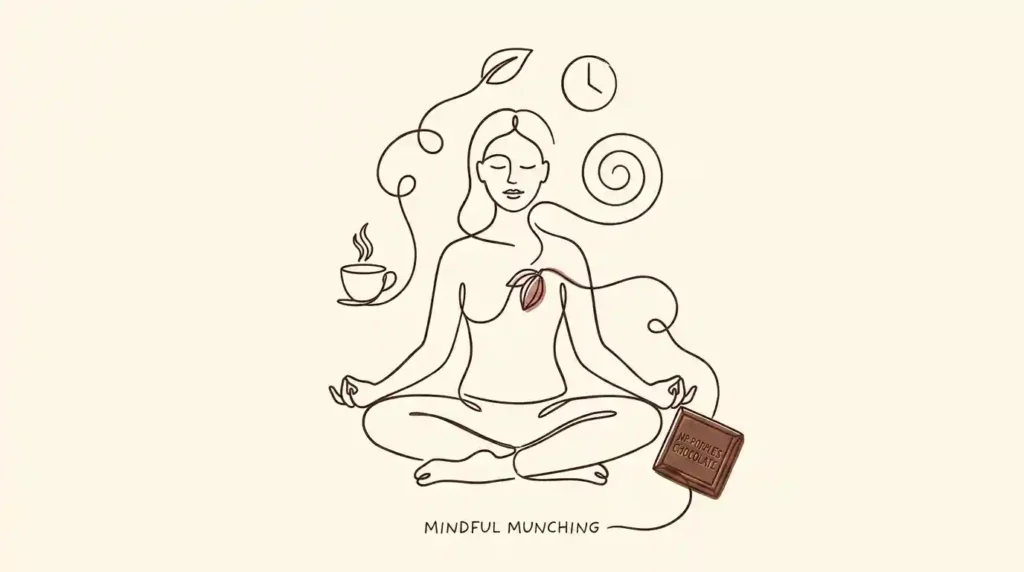
Practice the slow square
This sounds twee but it works. Pop a single square on your tongue and let it melt. Do not chew. Pay attention to the flavour changing as it warms. You will get more pleasure from one square eaten this way than from a whole bar inhaled at speed. The craving usually dissolves about halfway through the square.
Address the actual trigger
If you are stressed, ten minutes of fresh air will do more than ten chocolate bars. If you are hormonal, magnesium-rich foods (dark leafy greens, nuts, seeds, raw cacao) will help across the whole month. If it is habit, gradually shifting the timing or pairing it with something different (chocolate with a herbal tea, not in front of the TV) breaks the loop.
Plan your treats
Sounds boring, works brilliantly. Knowing you have a properly nice square coming after dinner removes the desperate-search energy that drives binges. The craving becomes anticipation rather than panic.
Stay hydrated
Half the time, what feels like a craving is mild dehydration. A glass of water before reaching for chocolate is not a magic fix, but it does eliminate one common false alarm.
Use chocolate as a workout reward
Genuine post-exercise carbs and protein support recovery. A small piece of high-cocoa chocolate after a workout is both psychologically rewarding and physiologically reasonable.
Three properly satisfying recipes
You can also turn chocolate into something that takes more time to eat, which naturally regulates how much of it you consume. These three recipes use Mr Popple’s bars, but any high-cocoa, low-sugar bar will work.
Hot chocolate without the sugar (the comfort drink)

The grown-up answer to a packet of cocoa powder and milk.
- Gently melt 20-25g of a dark chocolate bar (we’d suggest our Signature Seventy 70% chocolate bar for balance) into 250ml of hot plant-based milk.
- Whisk until smooth and frothy. A milk frother does the job in seconds.
- Optional but recommended: a pinch of cinnamon, a tiny dash of chilli, or a drop of peppermint extract. Or all three if you’re feeling ambitious.
For a spiced orange version, use the Dark Euphoric Orange chocolate bar instead, add a pinch of ground ginger and grated nutmeg, and finish with a twist of orange zest.
For a mocha, melt 20g of Atey Ate% (88% cacao bar) into 200ml hot plant-based milk, then combine with 50ml of fresh espresso. Frothed, ideally.
No sugar chocolate chip cookies

Surprisingly easy and surprisingly good.
- Chop a Signature Seventy bar into rough chunks (irregular is better than uniform – more interesting texture).
- Use these in place of regular chocolate chips in any standard cookie recipe.
- Replace the sugar in the recipe with a low-impact sweetener like erythritol, stevia, or coconut sugar.
The bars have a slightly lower melting point than industrial chocolate chips, so don’t over-bake. Pull them when the edges are just turning golden.
Raw chocolate avocado truffles

Sounds odd, tastes brilliant. Trust us.
- Gently melt 100g of Pure Peruvian 100% and stir into one ripe mashed avocado with a tablespoon of yacon syrup.
- Chill the mixture for 30 minutes until it firms up.
- Roll into walnut-sized balls and coat in raw cocoa powder, desiccated coconut, or chopped nuts.
- Keep refrigerated. They last about a week, if you can resist them.
Pairing suggestions for a slower experience
Pairing chocolate with another flavour stretches the eating experience and makes a small portion go further. A few combinations that genuinely work:
- 70% dark + fresh raspberries: tartness against richness, classic for a reason
- Orange chocolate + Earl Grey tea: the bergamot in the tea echoes the citrus
- Plant-based milk chocolate + roasted almonds: smooth meets crunch
- Dark chocolate + a glass of red wine: the tannins line up, somehow it works
- 80%+ very dark + black coffee: for the connoisseur evening
Building a sustainable chocolate habit
The goal here isn’t to give up chocolate. It is to enjoy it more, while eating less of it. That sounds like marketing-speak but it is genuinely how this works once you switch from quick-hit sugary bars to high-cocoa, slow-eaten ones.
A few sensible principles:
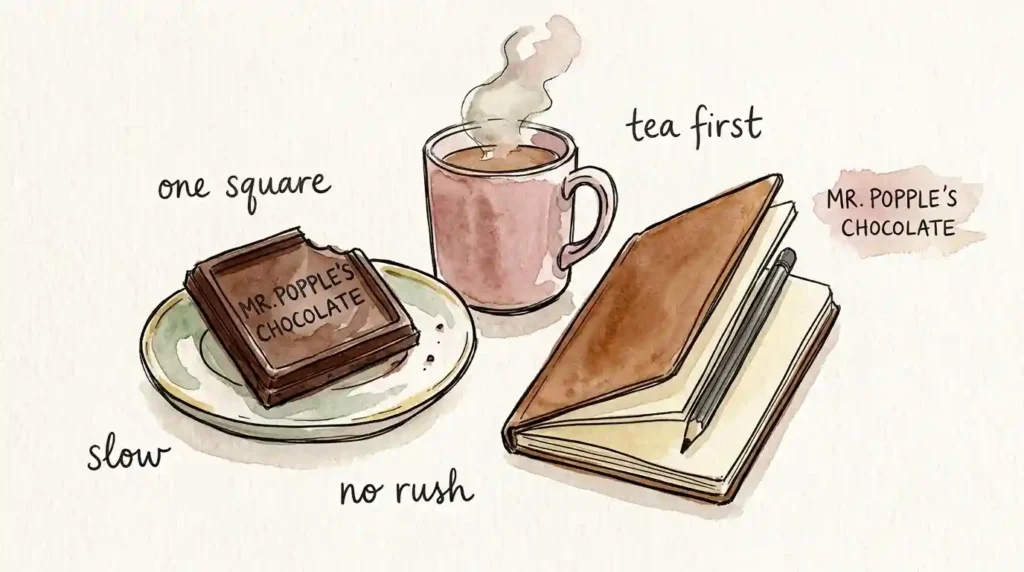
- One small portion daily beats a large portion weekly. Habit + satisfaction.
- Quality over quantity, every time. A 10g square of brilliant chocolate trumps a 100g bar of mediocre chocolate.
- Pair it with a moment. With tea, after dinner, on the doorstep with five minutes of fresh air. Anchor it to a calm point in your day.
- Keep it visible but rationed. Open a fresh bar, snap it into squares, and ration them out. Endless wrappers and full multipacks invite trouble.
If you want to make this easier still, our chocolate subscription box drops a curated selection through your letterbox each month. So your daily square sorts itself out without you thinking about it. You also save versus buying the bars individually, which doesn’t hurt.
Make the daily square sort itself out
Mr Popple’s chocolate subscription drops a curated mix of high-cocoa, naturally sweetened bars through your letterbox each month. So managing cravings becomes a habit you don’t have to think about. Plus, subscribers save on every order.
Skip or cancel any time · Free UK delivery plus discounted chocolate with all subscription boxes
Frequently Asked Questions
Why do I crave chocolate so much?
Most chocolate cravings come from a mix of stress, hormonal shifts, possible nutrient gaps (especially magnesium), and habit. Cocoa contains compounds that genuinely affect mood, so your brain learns to associate chocolate with feeling better – and asks for it again next time you feel rough.
Does chocolate craving mean a magnesium deficiency?
It can. Cocoa is one of the richest dietary sources of magnesium, so a persistent craving may be your body flagging a low-magnesium state. Other magnesium-rich foods include dark leafy greens, pumpkin seeds, almonds and avocados. If cravings are constant, it’s worth eating more of those generally.
What’s the healthiest chocolate to eat for cravings?
Dark chocolate with a high cocoa content (70% or above) and a natural sweetener like yacon syrup, coconut sugar, stevia or monk fruit. Avoid bars sweetened with maltitol or sorbitol, which can spike blood sugar and upset your digestion.
Will free from sugar chocolate satisfy cravings?
If it’s properly made, yes – and often more reliably than sugary chocolate, because the cocoa content is usually higher. The mood-boosting compounds in cocoa are what your brain is actually after; the sugar is just a short-lived dopamine hit on top.
How can I stop craving chocolate at night?
The 9pm urge is often habit rather than hunger. Try shifting the timing slightly (a small piece an hour earlier), pairing it with a herbal tea instead of TV, or genuinely enjoying a single square slowly rather than mindlessly working through more. The craving usually fades once the brain stops expecting the routine.
Is it bad to eat chocolate every day?
Not at all, if it’s a small portion of high-cocoa, low-sugar chocolate. A daily 10-20g square of 70%+ dark chocolate is a perfectly reasonable dietary inclusion and may even support cardiovascular and cognitive health. It’s the quantity and quality that matter, not the frequency.
Can chocolate help PMS cravings specifically?
Probably yes. Cocoa is rich in magnesium and contains mood-supporting compounds that may help with PMS symptoms. Choose a high-cocoa bar with minimal added sugar – the magnesium and theobromine are doing the work, the sugar isn’t.