Diabetic Chocolate: Is It Real, and Can Diabetics Eat Chocolate?
First published 11 Oct 2021|Last Updated 23 Oct 2026
By Ben Popple, founder of Mr Popple’s Chocolate · Updated October 2026 · 6 min read
🍫 The 60-second answer
People with diabetes can eat chocolate, in moderation and as part of a balanced diet. “Diabetic” chocolate is another matter: Diabetes UK doesn’t recommend it, and describing a food that way is against the law. Read the label instead, starting with total carbohydrate, and ask your GP or nurse what fits your plan.
For years, diabetic chocolate looked like the sensible choice. It had its own corner of the shelf, it often cost more than the bar next to it, and some of it carried a small warning on the back about what might happen if you enjoyed too much of it at once.
Then the advice turned round completely. Diabetes UK now tells people to skip it and have a smaller piece of ordinary chocolate instead. The word on the front was never the useful part of the wrapper. The numbers on the back are, and that’s what this guide is about: what a label can tell you, and what only your GP can.
For what it’s worth, I make ours without refined sugar, from unroasted cacao stone-ground below 42°C. Our darkest bar is nothing but cacao, and the rest are sweetened with yacon syrup or coconut blossom sugar.
Can people with diabetes eat chocolate?
You can still eat chocolate, and Diabetes UK says so plainly: in moderation, not too often, and as part of a healthy, balanced diet. The thing to watch is how much you eat in one go, because a lot at once affects your blood sugar levels.
Chocolate is a treat food for everyone, because it’s high in sugar, saturated fat and energy even in small portion sizes. The charity puts the average at 50g of sugar per 100g, so roughly half the weight of a typical bar is sugar. With that high sugar content, the type of chocolate and the size of the piece matter more than whether you have it at all.
Is there such a thing as diabetic chocolate?
Not any more, at least not under that name. In Diabetes UK’s words, “To describe a food as ‘diabetic’ is against the law”, because there’s no evidence these products offer any special benefit. It doesn’t recommend these bars either: they’re just as high in saturated fat and calories, they can still raise blood sugar, and they’re often more expensive.
The charity and the European Commission both concluded that these foods have no role or benefit, and the charity wants “suitable for diabetics” off food labels too. Its advice is to choose ordinary chocolate and eat a smaller portion.
That’s why neither phrase appears on any of our wrappers. I’d rather print exactly what’s in each bar and let you and your GP make the call.
Is sugar-free chocolate a better choice?
Not automatically. “Sugar-free” tells you what’s missing, not what replaced it. Some sugar-free bars use sugar alcohols such as maltitol instead, and by law any food with more than 10% added polyols must carry the warning “excessive consumption may produce laxative effects”. The sweetener matters as much as the missing sugar.
For the record, we never use sugar alcohols, stevia or refined sugar. Our darkest bar has no sweetener at all, three of our dark bars are sweetened with yacon syrup, and the rest use coconut blossom sugar.
What chocolate can diabetics eat? Dark, milk and white compared
Diabetes UK suggests good-quality dark chocolate, around 70% cocoa or higher, because its stronger taste means you may find you eat a bit less. Milk or white chocolate is usually higher in sugar, since there’s less cocoa in the bar, which makes dark chocolate the better choice of the three.
People often tell me they’ve heard anything with at least 70% cocoa is good for you. I agree it’s a big step up from milk chocolate, then point out how much sugar a 70% bar can still hold: one supermarket 70% bar in the label comparison below is almost a third sugar. The percentage tells you the cocoa content, not the amount or type of sugar used.
If you want the least sugar of all, 100% chocolate is the best option, because it’s nothing but cacao. It’s an acquired taste, though, which is where a slow start helps, and there’s more on that below.
How to read a chocolate label
Start with total carbohydrate, not just the sugar. Diabetes UK’s carb-counting advice is to count the total amount of carbs rather than the “of which sugars” line, because that takes in everything that affects blood glucose. Then check the ingredients for the sweetener, and compare different types of chocolate per 100g so you’re comparing like with like.
🔍 Decoder: “of which sugars”
The part of the carbohydrate total that is sugar. Starch is counted in the carbohydrate total but not in this line, and fibre has a line of its own.
Here’s how that looks on our own labels, per 100g, straight from the nutrition panel:
90% cocoa (Sainsbury’s Taste the Difference Ugandan)
20.7g
10.4g
10.7g
sugar
† USDA counts fibre inside its carbohydrate figure, so we’ve taken it out (45.9g minus 10.9g) to match a UK label.
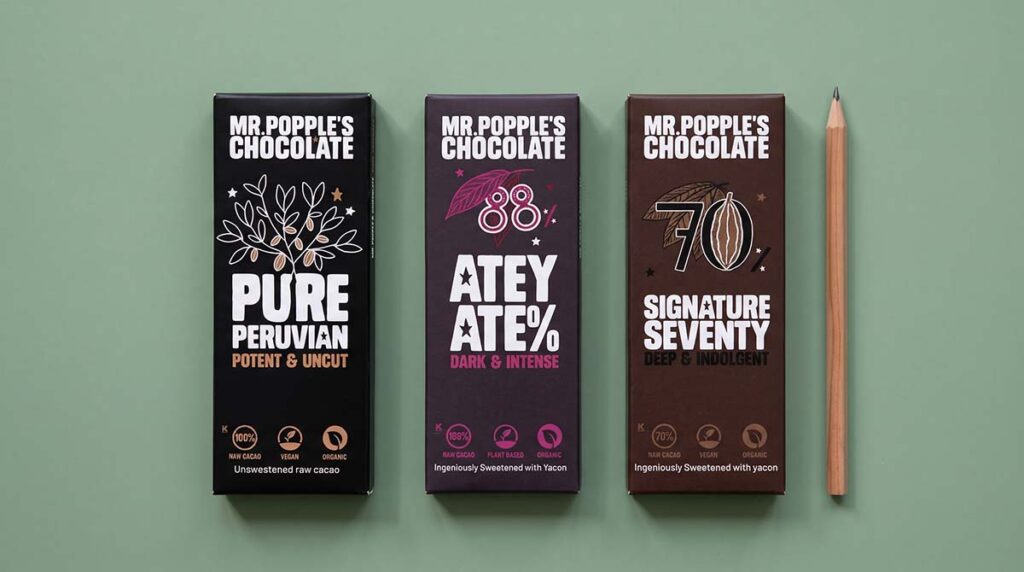
Our Signature Seventy, at 70%, has 9.5g of sugars, and Atey Ate% at 88% has 4.8g.
On a very dark bar the carbohydrate figure is several times the sugars figure, which is exactly why it’s the one to count. Pure Peruvian has no added sugar, just the cacao’s naturally occurring sugars, and Atey Ate% is low in sugar. Take the per-100g figures to your GP or nurse if you’re not sure how a bar fits your plan.
Compare our bars, label by label
Every bar we make starts as unroasted Peruvian Criollo cacao, stone-ground for 60-80 hours below 42°C with no refined sugar, and the full nutrition panel sits on each product page.
Free UK delivery over £25 · Plastic-free packaging · Top 14 allergen free · BDA organic certified
Diet, activity and your care team
Food is one part of managing the condition, not the whole of it. For people with type 2 diabetes, the NHS says lifestyle changes can help lower blood glucose levels, including a healthy diet and at least 2.5 hours a week of walking or another activity that leaves you out of breath.
A healthy lifestyle with regular physical activity sits alongside what’s on your plate, and your check-ups will look at things like cholesterol and blood pressure as part of your overall health. If changing your diet feels hard, a GP or other healthcare professional can point you to support, including free courses.
How to enjoy chocolate as part of a balanced diet
Diabetes UK’s tips help you still enjoy chocolate in small amounts: decide how much you’ll eat and put the rest away, share it, and choose dark chocolate with a stronger taste so a little goes further. If you carb count, use the label’s carbohydrate content to work out your insulin dose, the way your care team has taught you.
The other tip is about taste. People who’ve cut back on sugar often tell me the darkest bar tastes less bitter than they expected. So I suggest you taste the darkest first, before anything sweet reaches your palate, and let a square melt slowly so you can savour the flavour rather than chewing it straight away.
“I’ll never tell you a bar is right for you. I’ll tell you exactly what’s in it, so you can take that to your GP.”
Ben Popple, founder of Mr Popple’s Chocolate
Start with the darkest bar we make
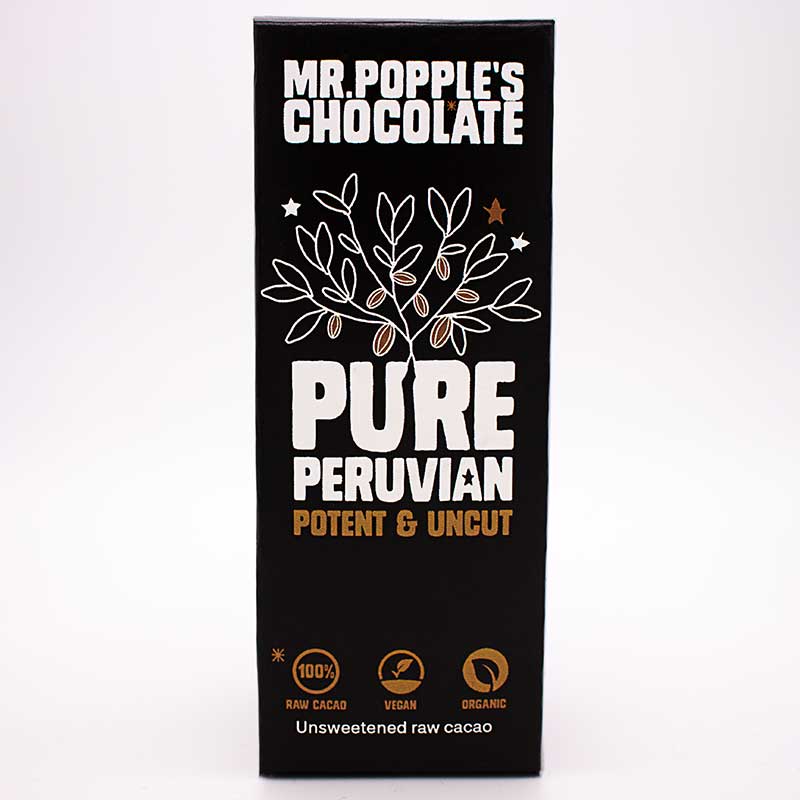
Pure Peruvian is single-origin Peruvian Criollo cacao and nothing else, kept raw and stone-ground below 42°C, with no added sugar, just the cacao’s own naturally occurring sugars.
Free UK delivery over £25 · Plastic-free packaging · Top 14 allergen free · BDA organic certified
Frequently Asked Questions
Can diabetics eat chocolate every day? Diabetes UK describes chocolate as a treat rather than an everyday food, and suggests small portions, not too often, as part of a healthy, balanced diet. How much fits into your day depends on your treatment and your targets, so it’s a question for your GP or nurse, who know your numbers.
Can you treat a hypo with chocolate? No. Diabetes UK says chocolate isn’t good for treating hypos, because the fat slows down how quickly the sugar is absorbed, so it doesn’t work fast enough. Use the fast-acting hypo treatment your healthcare team has recommended, such as glucose tablets or a glucose drink.
What is the best chocolate for diabetics? There isn’t one bar that suits everyone. Diabetes UK suggests good-quality dark chocolate of around 70% cocoa or higher, and for the least sugar, 100% chocolate is the best option because it’s only cacao. Whichever you choose, compare total carbohydrate per 100g and check with your GP or nurse.
Is dark chocolate linked to a lower risk of type 2 diabetes? In a US study published in the BMJ in 2024, people who ate dark chocolate five or more times a week had a 21% lower risk of developing the condition than those who rarely did, and milk chocolate showed no link. It can’t prove cause, and a trial of cocoa flavanol supplements (a type of flavonoid) found no effect on that risk.